Seeing those greatly effected by the recent storms is devastating. While in various places the assessment of damage is still being assessed, physically, FDA also is assessing the set-backs from the recent natural disaster. This was expressed in a recent FDA Voice Blog by Margaret Hamburg, M.D., FDA Commissioner.
Read More
There continues to be much discussion over the FDA’s 510(k) program, which has led to controversy and confusion over the direction of the program. In fact, we have posted many blogs devoted to this topic, so we thought it was time to create a whitepaper focusing on the topic.
Read More
In an effort to promote innovation while protecting the population at large, FDA has been on a path to revise the existing regulatory pathway surrounding the 510(k) process for medical devices for several years. This continues to be an area of many questions and considerations. In fact, we’ve devoted a whitepaper to these issues to help researchers understand the 510(k). Recently FDA released a Draft Guidance on the eCopy Program for Medical Device Submissions. While this system is currently voluntary, the draft guidance gives industry an idea of what might be in store for device submissions.
Read More
It hit the headlines in a dizzy twist on words. The CEO of St. Jude put the cart before the horse in warning investors that he was expecting a warning letter from FDA before one was actually even issued! According to a report on MedCity News, this type of announcement apparently has no precedent. Have you ever heard of a company proactively telling Wall Street they’re going to receive the dreaded warning letter before receiving it- or even a FDA form 483? This was something that was on the mind of analyst Bob Hopkins of Bank of America.
Read More
Stemming from the much anticipated Medical Device User Fee & Modernization Act (MDUFMA), FDA issued a new guidance regarding Premarket Approval Applications (PMAs) review and approval timelines. As the guidance plainly states in the introduction “the additional funds obtained from user fees will enable FDA, with the cooperation of industry, to improve the device review process to meet certain performance goals and implement improvements for the medical device review process.”
Read More
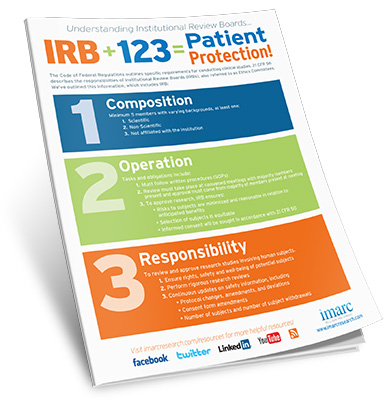
The key players in a clinical investigation are infamously made up of Sponsors, monitors, investigative sites, and patients. A fundamental part of the team is also the Institutional Review Board (IRB), as they oversee the conduct of clinical research. Per the FDA’s IRB information sheet, “IRBs are responsible for continuing review of ongoing research to ensure that the rights and welfare of human subjects are protected.” That’s a tall order!
Read More
Conflict of interest can be defined as occurring when an individual or organization is involved in multiple interests, one of which could possibly corrupt the motivation for an act in the other. While many may see disclosure of conflict of interest as just another form to check off the list, it’s an important aspect in a study to ensure the trial is conducted with the utmost integrity and responsibility.
Read More
At times, a Sponsor may provide a site with a memo allowing the site to enroll a patient who does not meet all inclusion or exclusion criteria. Or a Sponsor may give the site pre-approval to deviate from the protocol-defined visit windows. Is this waiver enough? Would the investigative site be covered in the event of a federal audit?
Read More
It wasn’t too long ago that new recommendations for improving the 510(k) medical device review processes were published with the goal of installing a pre-review assessment that would check applications and reject submissions dibbed incomplete. FDA took steps forward with this plan and released the FDA Draft Guidance: Refuse to Accept Policy for 510(k)s (RTA).
Read More
In August 2011, FDA released a draft guidance document recommending a Risk-Based approach to monitoring. Risk- Based Monitoring combines the vigilance and data surveillance (key features of Electronic Data Capture systems) with traditional on-site data verification targeting critical data points. Rather than a standardized monitoring plan, Risk-Based Monitoring aims to adapt the monitoring plan to the changing needs of the Study, Site and Investigational Product.
Read More