
IMARC Blog

Compliance In Focus

FILTER BY:

Newest Post

Posted by John Lehmann on Thu, Aug 13, 2015

Why Do We Need to Audit?

How is auditing different than monitoring? Why do we need to audit? Since these questions are so often asked, we decided to create a graphic that will help you understand when to consider an audit. In short, auditing brings an independent, quality assurance perspective to the clinical research landscape Investigational sites, sponsors, and vendors benefit from high-level process assessments and improvements. Experienced auditors leverage extensive training to help ensure subject safety, data integrity, and protocol and regulatory compliance.

Topics: GCP, Auditing, Quality Assurance

Posted by John Lehmann on Tue, May 05, 2015

Screening or Consent: Which Came First?


The informed consent process is arguably one of the most important parts of a clinical research study. Fromthe Principles of ICH GCP: the rights, safety, and well-being of the trial subjects are the most important considerations and should prevail over interests of science and society. Proper informed consent ensures that the patient is aware of the risks and requirements of being in a research study and has voluntarily agreed to participate in research.  The regulations, CFR part 50 also cover the importance, rules and process of informed consent.

Topics: Informed Consent, Research Coordinators, GCP

Posted by John Lehmann on Wed, Mar 04, 2015

GCP… What Does it Mean?

Do you know why rules, regulations and standards exist? What exactly is Good Clinical Practice and how does this help protect patients and data integrity?

Topics: Good Clinical Practice, GCP, Clinical Research

Posted by John Lehmann on Wed, Mar 04, 2015

Why Do We Need to Audit?

How is auditing different than monitoring?  Why do we need to audit?  Since these questions are so often asked, we decided to create a graphic that will help you understand when to consider an audit. In short, auditing brings an independent, quality assurance perspective to the clinical research landscape Investigational sites, sponsors, and vendors benefit from high-level process assessments and improvements. Experienced auditors leverage extensive training to help ensure subject safety, data integrity, and protocol and regulatory compliance.

Topics: GCP, inforgraphic, IMARC Research, Auditing

Posted by John Lehmann on Wed, Mar 04, 2015

What are Good Documentation Practices?

Whether on the site or sponsor level, in clinical research we are asked to use  Good Documentation Practices (GDP) during the conduct of a clinical trial.  One might assume that a quick visit to the FDA website would produce the list of practices.  However, there is no Code of Federal Regulations for GDP.

Topics: Good Documentation Practices, GCP, FDA

Posted by Brandy Chittester on Wed, Mar 04, 2015

Screening or Consent: Which Came First?

The informed consent process is arguably one of the most important parts of a clinical research study. From the Principles of ICH GCP: the rights, safety, and well-being of the trial subjects are the most important considerations and should prevail over interests of science and society. Proper informed consent ensures that the patient is aware of the risks and requirements of being in a research study and has voluntarily agreed to participate in research.  The regulations, CFR part 50 also cover the importance, rules and process of informed consent.

Topics: CFR Part 50, Informed Consent, GCP, FDA

requestconsult-bg.jpg
Clinical Research Training Requirements
Featured Resource

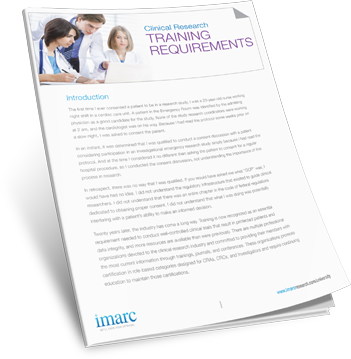
clinical research Training requirements

This whitepaper examines the similarities and differences between various US and international regulations and place them within the context of any number of roles found within the realm of clinical research.