<img height="1" width="1" style="display:none" src="https://www.facebook.com/tr?id=213807269037206&ev=PageView&noscript=1">
IMARC Blog

Compliance In Focus

FILTER BY:

Newest Post

John Lehmann

Recent Posts

Posted by John Lehmann on Tue, Jan 08, 2019

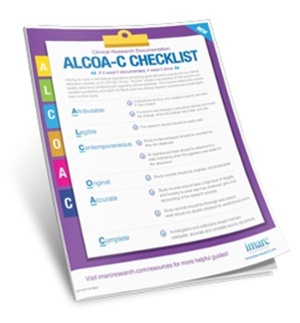
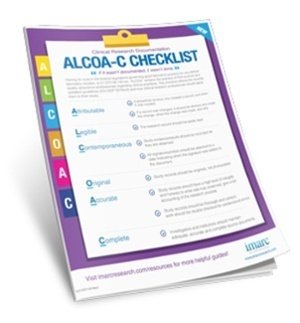
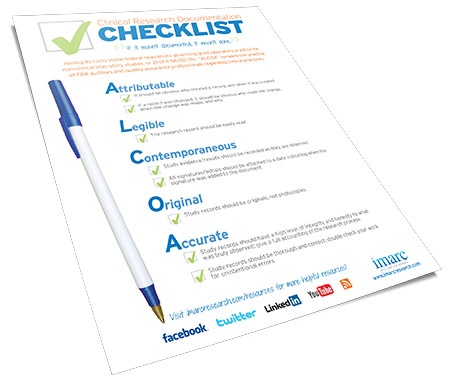
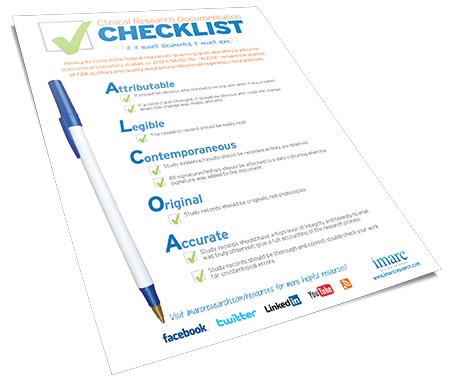
ALCOA-C Checklist for Download

Clinical research professionals have an obligation to uphold the highest ethical standards and make all possible efforts to comply with Good Clinical Practice. Proper documentation is of the upmost importance in our work!

Topics: ALCOA-C Checklist, Good Clinical Practice

Posted by John Lehmann on Thu, Dec 20, 2018

IMARC's Most Popular Clinical Research Resources From 2018


Topics: Compliance Partners

Posted by John Lehmann on Wed, Nov 28, 2018

5 Keys to Choosing a Medical Device CRO

When it comes to ensuring compliance, keeping your trial on track and bringing your medicaldevice to market faster, having independent oversight from a strategic partner makes all the difference.

Topics: CRO Selection, Compliance-minded, Medical Device Clinical Trial

Posted by John Lehmann on Thu, Nov 15, 2018

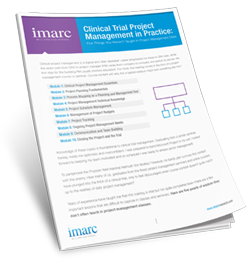
Clinical Trial Project Management in Practice

Clinical project management is a logical and often desirable1 career progression for those in CRA roles. While the exact path from CRA to project manager (PM) varies from company to company and person to person, the first step for the budding PM usually involves education. For most, this training comes in the form of a project management course or seminar.

Topics: Project Management, IMARC Whitepaper

Posted by John Lehmann on Fri, Oct 19, 2018

IMARC at MAGI Clinical Research Conference 2018 West

IMARC Research will be represented at the MAGI Clinical Research Conference 2018 West in San Diego, October 21-24, 2018. The Director of Clinical Support Services, Rachel Silver-Kessler, will hold a work session for sponsors and CROs to share best practices for working with sites, and will present on adverse event reporting in medical device studies. Check out the full conference agenda here.

Topics: MAGI Conference, IMARC Research

Posted by John Lehmann on Thu, Sep 27, 2018

Don’t Make These Mistakes In Your Clinical Trial: The Most Common FDA Violations


The FDA’s Bioresearch Monitoring (BIMO) inspection program ensures the protection of the rights, safety and welfare of human subjects during clinical research trials.

The most recent results represent findings from more than 1,300 clinical research audits of clinical investigators, sponsors and IRBs for the 2017 fiscal year.

This whitepaper covers the seven most common ones and how you can avoid them.

Topics: FDA Warning Letters

Posted by John Lehmann on Thu, Sep 13, 2018

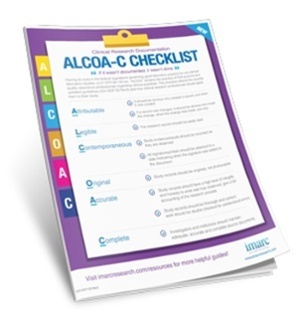
ALCOA-C - The Importance of Clinical Research Documentation

Clinical research professionals have an obligation to uphold the highest ethical standards and make all possible efforts to comply with Good Clinical Practice. Proper documentation is of the upmost importance in our work! .

Topics: ALCOA-C, ALCOA Checklist

Posted by John Lehmann on Wed, Sep 05, 2018

How Much Could You Save With An Electronic Trial Master File Review? [VIDEO]

Your trial master file (TMF) tells the story of your entire clinical study, so you want to make sure it’s complete and accurate before the FDA reviews it. 

Hiring a third party to review your trial master file is the best way to ensure you’ve checked all the boxes.

However, the cost of a TMF audit can be significant.


Topics: trial master file, Clinical Trials

Posted by John Lehmann on Mon, Aug 20, 2018

Comprehensive Training Design for Clinical Research Associates and Coordinators

Training programs should build proficiency in core job skills and be based on a strong regulatory foundation. Course curriculum should include practicum/on-the job training as well as exposure to emerging topics such as future trends in clinical data and patient centricity.

Topics: Training Design, CRAs, CRCs

Posted by John Lehmann on Wed, Aug 15, 2018

Steps to Make Your Monitoring Matter

In order to comply with applicable regulations and requirements, the intention of clinical trial monitoring is to protect the rights and well-being of study subjects, ensure data integrity, and ensure that the trial conduct is in compliance with the clinical investigational plan (CIP), agreements, GCP, requirements of the Institutional Review Board (IRB) / Ethics Committee (EC), and all applicable regulations.

Topics: Clinical Monitoring, GCP

Posted by John Lehmann on Wed, Jul 25, 2018

Creating a Monitoring Mindset

While procedures, checklists, guidance documents, report templates and all sorts of other things combine to form the infrastructure for monitoring, what is possibly even more important is the shared mindset—the acceptance by all that, regardless of one's title, there is a shared responsibility in calling out issues, in looking purposefully at this document, in questioning that blank. 

The purpose of clinical trial monitoring

Topics: Clinical Monitoring, Monitoring Mindset, Clinical Study Personnel

Posted by John Lehmann on Wed, Jul 18, 2018

Conducting a Clinical Vendor Audit

In today’s business environment, it’s important to have reliable partners who can help you achieve your business goals and objectives. In clinical research, this is especially true. One proactive way to ensure your trial partners are meeting your standards is to conduct vendor audits.

Topics: Clinical Vendor Audits, Auditing

Posted by John Lehmann on Tue, Jul 10, 2018

What Are Your Monitoring Pain Points?

We have had many conversations with sponsors regarding their needs for monitoring support services. It is clear that while many sponsors consider the outsourcing of their monitoring needs to a CRO, they have many concerns that they have shared with us.

Topics: Clinical Monitoring, CRO

Posted by John Lehmann on Wed, Jun 20, 2018

A Guide to Source Data Extraction and Verification

Reviewing a medical chart can be a daunting task for anyone on the research team. However, ensuring proper data extraction and source data verification is paramount to ensuring data integrity and subject safety in your clinical trial.

Topics: Source Data Extraction, Medical Chart

Posted by John Lehmann on Tue, Jun 12, 2018

Effective Monitoring for a Medical Device Trial

While procedures, checklists, guidance documents, report templates and all sorts of other things combine to form the infrastructure for monitoring, what is possibly even more important is the shared mindset. The acceptance by all that regardless of the title, there is a shared responsibility in calling out issues, in looking purposefully at this document, in questioning that blank. 

Topics: Clinical Trial Monitoring, Monitoring Mindset

Posted by John Lehmann on Wed, May 30, 2018

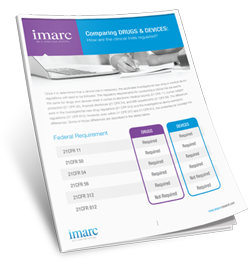
A Comparison: Drug and Medical Device Clinical Trials

Understanding the similarities and appreciating the differences of drug and medical device clinical trials is important for every trial participant—from the patients to the researchers. Whether the product being investigated is a drug or device, a well-organized, efficient clinical trial can save time and money for each individual and organization involved. Additionally, the faster and more accurately a trial is performed, the faster the new medication or clinical product can be introduced to the market and begins helping the community.

Topics: Drugs vs. Devices, Clinical Trials

Posted by John Lehmann on Wed, Apr 04, 2018

Do You Conduct Clinical Vendor Audits?

In today’s competitive business environment, it’s important to have reliable partners who can help you achieve your business goals and objectives. In clinical research, this is especially true. One proactive way to ensure your trial partners are meeting your standards is to conduct vendor audits.

Posted by John Lehmann on Tue, Mar 27, 2018

What Makes A Well Controlled Clinical Trial?

A well-controlled clinical trial is much like a well controlled experiment. They are both rooted in the cornerstone of the scientific method. What exactly is a clinical trial? According to clinicaltrials.gov, “In a clinical trial (also called an interventional study), participants receive specific interventions according to the research plan or protocol created by the investigators. These interventions may be medical products, such as drugs or devices; procedures; or changes to participants' behavior, for example, diet.” In the 21 CFR 314.126, the FDA lays out regulations as to what makes an “Adequate and Well-Controlled study” as one that has:

Topics: Well-Controlled Clinical Study, clinicaltrials.gov

Posted by John Lehmann on Thu, Mar 15, 2018

Making Sense of Safety Oversight in Clinical Research Webinar

This webinar will provide clinical research professionals with an understanding of safety oversight for clinical studies, including regulatory requirements and best practices. The presentation will include a discussion of the FDA’s Guidance on the Establishment and Operation of Clinical Trial Data Monitoring Committees, and help attendees understand the differences between Data Safety Monitoring Boards (DSMBs), Clinical Events Committees (CECs), and Medical Monitors. Professionals at research sponsors, CROs, sites, and IRBs will learn when each type of safety oversight is recommended and how to provide effective, efficient safety monitoring. Participants will also hear from a DSMB Chair about their experiences and the important impact of safety groups to research studies.

Topics: Safety Oversight, Webinar, IMARC Research

Posted by John Lehmann on Wed, Mar 14, 2018

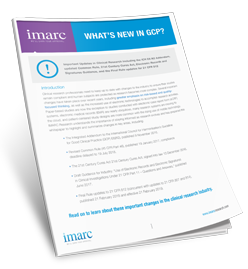
What Is New In GCP

Clinical research professionals need to keep up to date with changes to the industry to ensure their studies remain compliant and human subjects are protected as research becomes more complex. Several important changes have taken place over recent years, including greater emphasis on risk-based and quality-focused thinking, as well as the increased use of electronic technologies to accomplish research activities.

Topics: GCP, IMARC Research Whitepaper

Posted by John Lehmann on Thu, Mar 08, 2018

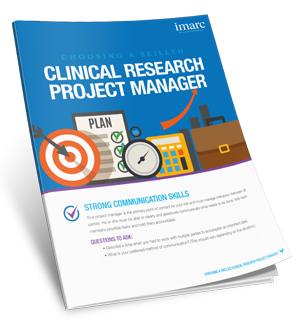
Choosing the Right Clinical Project Manager

The right clinical research project manager will keep your trial on track so you can bring your device to market faster. The wrong one can bring unwelcome interference, hindering progress.

Posted by John Lehmann on Mon, Jul 09, 2018

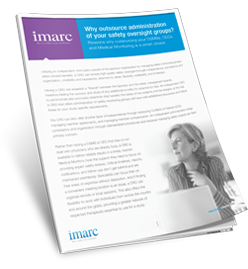
Why Outsource Administration of Your Safety Oversight Group?

You may think your team has covered all the bases when it comes to protecting the safety of human subjects in your clinical trial. You have a team of monitors in place to review reports and ensure your trial follows safety protocols. However, every trial needs a system of checks and balances.

Topics: Safety Monitoring Oversight, Outsourcing

Posted by John Lehmann on Fri, Feb 02, 2018

FDA’s 2018 Strategy Includes Digital Health and Diagnostic Focus

US FDA Commissioner Scott Gottlieb provided some key digital health initiatives along withFDA 2018 Strategy.jpg his vision on how he wants the agency to work with the sector in the coming years.

Topics: FDA, Digital Health,, Diagnostic

Posted by John Lehmann on Tue, Jan 30, 2018

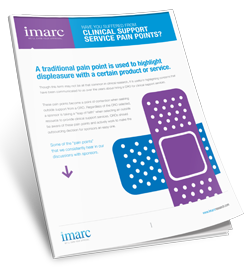
Clinical Support Service Pain Points


Outsourcing clinical support services is a common practice, but can be a challenging process. Over the years, we have had many conversations with sponsors regarding their need for clinical support services and they have shared many of the challenges they have faced.

Topics: Clinical Reseasrch, Clinical Support Services

Posted by John Lehmann on Wed, Jan 24, 2018

IMARC Research Opens New Office in Minneapolis Area

IMARC Research has moved to a new office in the Minneapolis area, in Minnetonka. The office will continue to be managed by Jim Moat, Director of Clinical Monitoring Services.

Jim is a Certified Clinical Research Associate with over 26 years of experience in medical device product development, having managed all phases of clinical studies – from pre-market strategy to post-market surveillance.

Topics: IMARC Research

Posted by John Lehmann on Wed, Jan 17, 2018

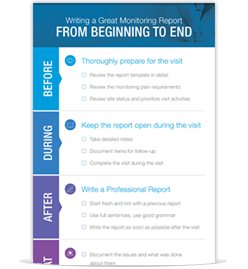
Writing a Great Monitoring Report – From Beginning to End

Writing great monitoring reports is not just about writing the report. It requires an in depth How to Write a Great Monitoring Report Checklist.pngknowledge of the job, the study protocol, the site, their practices, the sponsor’s procedures, the monitoring plan, the report template, and of course, the regulations. Attention to visit preparation, clear notetaking during the visit, and prompt, clear report writing pays off in delivering a high-quality document. It is a difficult skill to master, but one that is rewarding, especially when faced with a regulatory inspection.

Topics: Monitoring Report, Writing

Posted by John Lehmann on Wed, Jan 17, 2018

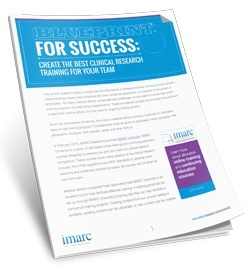
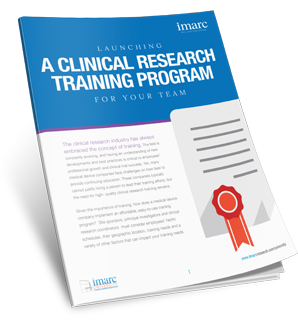
Creating a Blueprint for Training Success

Having a well-trained clinical research staff is vital to ensuring compliance and securing regulatory approval. Providing training solutions for continuous improvement, understanding industry best practices and new clinical developments – is vitally important to employees. Yet many medical device companies face challenges on how best to provide high-quality training programs for their clinical departments.

Topics: Clinical Training, IMARC University

Posted by John Lehmann on Thu, Jan 04, 2018

Tips for Surviving an FDA Inspection

You just got the phone call; the Food and Drug Administration (FDA) Inspector is coming for a visit.

Topics: FDA Inspection, BIMO Inspection

Posted by John Lehmann on Tue, Nov 21, 2017

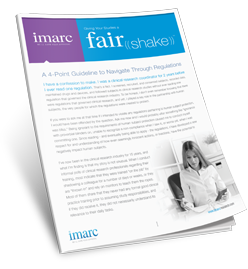
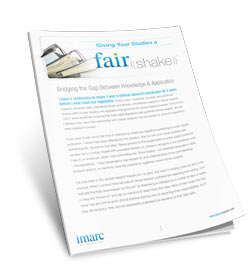
Giving your Studies the FAIR Shake

IMARC’s FAIR Shake technique takes a complicated maze of regulations and breaks them down into four simple areas your team can apply to clinical research questions.

Using this technique will give you confidence in resolving potential compliance issues and bridge the gap between knowledge and application. There’s a reason our FAIR Shake guide is one of our most-requested resources.

Topics: FAIR Shake technique, IMARC Research, FDA Regulations

Posted by John Lehmann on Thu, Nov 16, 2017

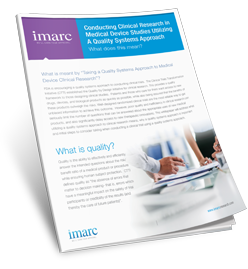
Conducting Clinical Research Utilizing a Quality Systems Approach

FDA is encouraging a quality systems approach to conducting clinical trials. The Clinical Trials Transformation Initiative (CTTI) established the Quality by Design initiative for clinical research. Patients and those who care for them want access to new drugs, devices, and biological products as quickly as possible, while also being assured that the benefits of these products outweigh the risks.

Topics: Quality Systems, Medical Device Studies, Clinical Research

Posted by John Lehmann on Wed, Oct 25, 2017

Drug and Medical Device Clinical Trials 101

Most medical professionals enjoy being on the forefront of new clinical treatments, techniques and products. Drug and device research trials are a great opportunity for those in the healthcare field to learn about and assist in the development of revolutionary ways to treat patients, before they’re introduced to the public. These studies can provide invaluable information and learning experiences to everyone involved. IMARC has published a whitepaper on this important topic.

Topics: medical device clinical trials

Posted by John Lehmann on Thu, Sep 21, 2017

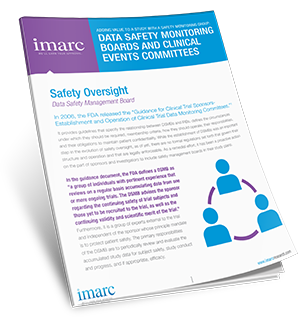
Safety Monitoring Oversight Adds Value to Your Study

Researchers agree that the highest standards in clinical research need to be preserved to maintain the public’s confidence in their work, competence, and ethics. With patient safety as a primary consideration, the implementation of safety monitoring is paramount. One means of adding this value to a study is utilizing a Data Safety Monitoring Board (DSMB) and/or a Clinical Events Committee (CEC).

Topics: Safety Monitoring Oversight, DSMB, CEC

Posted by John Lehmann on Tue, Sep 19, 2017

Working with IMARC: Your Partners in Compliance

Our latest guide is an in-depth look at how IMARC can work with you to ensure compliance throughout the Clinical Trial Lifecycle, including case studies within the following areas of service: Monitoring, Auditing, Project Management, Safety Management, Training and Consulting.

Topics: Compliance Partners, Medical Device CRO

Posted by John Lehmann on Thu, Sep 14, 2017

Ensuring Compliance at Every Stage In the Clinical Trial Lifecycle

Topics: Clinical Trial Lifecycle, Medical Device Trials, Compliance Partners

Posted by John Lehmann on Wed, Aug 30, 2017

Giving Your Studies a FAIR Shake

I was talking with a professional colleague recently, who referenced IMARC Research’s FAIR Shake™ method as a tool she uses regularly in her clinical research activities. It prompted me to feature our whitepaper on the FAIR Shake™ training program. Even though it is one of our older papers, it is still a useful tool for clinical research professionals. This technique helps you bridge the gap between knowledge and application.

Topics: FAIR Shake technique, Clinical Research

Posted by John Lehmann on Tue, Aug 15, 2017

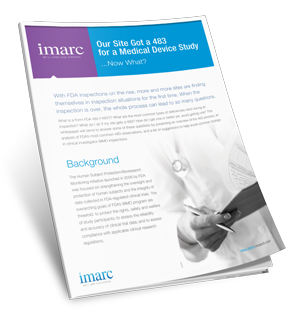
Our Site Got a 483 - Now What?

Your friends from the FDA stopped by and noted several red flags at your site in a Form 483. Now what? The most important thing you can do as a principal investigator is accept responsibility for these violations and demonstrate you're taking steps to address them.

Topics: Form 483, FDA, Principal Investigator

Posted by John Lehmann on Wed, Jul 26, 2017

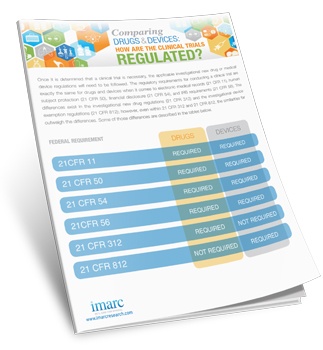
Comparing Drug and Device Trials

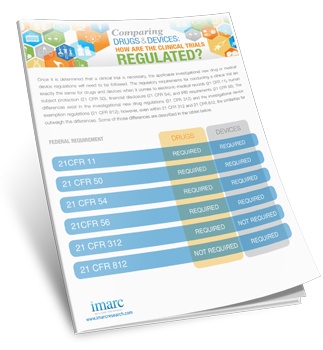
IMARC Research has published a whitepaper outlining the similarities and differences between drug and device clinical trials. Since IMARC focuses primarily in the medical device space, we felt it was important to highlight the differences between the two trials. It has proven to be one of our more popular whitepapers, so we have decided to offer an infographic as a quick reference.

Topics: Drugs vs. Devices, Clinical Trials

Posted by John Lehmann on Mon, Nov 06, 2017

FDA User Fee Financial Impact

I ran across an article in a recent edition of Medtech Insight that focused on the 10 key details from US FDA agreements that will impact medical device and diagnostics companies. The article indicates that the US FDA user-fee reauthorization legislation is proceeding through Congress, most recently with a May 11 markup in the Senate Health, Education, Labor and Pensions Committee. Lawmakers would like to see a bill passed in July.

Topics: FDA, user-fee reauthorization, Congress

Posted by John Lehmann on Tue, Jun 27, 2017

When to Enlist a DSMB or CEC For Your Clinical Trial [INFOGRAPHIC]

Evaluating patient data to ensure the continued safety of clinical trial subjects is an important part of a sponsor’s responsibility. Sponsors often enlist the help of independent boards to ensure expert oversight and eliminate the potential for bias.

Topics: Safety Monitoring, DSMB, CEC

Posted by John Lehmann on Thu, Jun 22, 2017

Device Monitoring is More Than SDV

Many believe good monitoring should heavily focus on Source Data Verification (SDV), which stripped down to its simplest meaning equates to “X=X” and “Y=Y”. And maybe some of you reading this are thinking “Isn’t that exactly what monitoring is?” While data integrity is absolutely essential, it is only the beginning of what comprehensive monitoring encompasses.

Topics: Clinical Monitoring, Source Data Verification, Medical Devices

Posted by John Lehmann on Thu, Jun 15, 2017

10 Attributes of an A+ Clinical Monitoring Service

Monitors that perform their job at a high level can drive the growth and reputation of their company. The companies that employ these monitors are equipped to meet the needs of their clients and ensure that patient safety and data integrity are maximized.

Topics: 10 Attributes, Clinical Monitoring, CRO

Posted by John Lehmann on Tue, Jun 06, 2017

Minimizing Risk in Imaging Clinical Trials Webinar

Sandra Maddock, CEO & President for IMARC Research will be joining Tim Kulbago, Vice President, Imaging for ERT for a webinar entitled “Minimizing Risk in Imaging Clinical Trials” webinar on Thursday, June 15th at 10:00 a.m. EDT.

Topics: Imaging in Clinical Trials, Sandra Maddock, Tim Kulbago

Posted by John Lehmann on Thu, Jun 01, 2017

Medical Device Classification Guide

A clinical trial is required for all new drugs, but this is not the case for all medical devices. Medical devices start by undergoing a risk assessment in order to determine the severity of potential harm to the user and the probability of that harm occurring. Each device is assigned to one of three classes based on this assessment, and this classification dictates whether or not a clinical trial is necessary.

Topics: Medical Device Classifications

Posted by John Lehmann on Thu, May 11, 2017

Importance of Clinical Vendor Audits

In today’s business environment, it’s important to have reliable partners who can help you achieve your business goals and objectives. In clinical research, this is especially true. One proactive way to ensure your trial partners are meeting your standards is to conduct vendor audits.

Topics: Vendor Audits, Clinical Research

Posted by John Lehmann on Thu, Apr 27, 2017

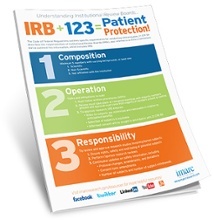
IRB + 123 = Patient Protection

The key players in a clinical investigation are infamously made up of Sponsors, monitors, investigative sites, and patients. A fundamental part of the team is also the Institutional Review Board (IRB), as they oversee the conduct of clinical research. Per the FDA’s IRB information sheet, “IRBs are responsible for continuing review of ongoing research to ensure that the rights and welfare of human subjects are protected.” That’s a tall order!

Topics: Patient Protection, IRB, FDA

Posted by John Lehmann on Fri, Apr 21, 2017

The Immortal Life of Henrietta Lacks

On Saturday, April 22nd, HBO will premier their film “The immortal Life of Henrietta Lacks.” We are excited to see the story becoming a film and thought we would republish a blog that we posted back in 2013 to honor the topic.

Topics: Henrietta Lacks, HBO

Posted by John Lehmann on Tue, Apr 11, 2017

A Risk-Based Monitoring Checklist

Many people are under the impression that Risk-Based monitoring equates to less monitoring, which isn’t actually the case. IMARC Research has utilized risk-based monitoring since the company was founded and we have always believed that Risk-Based Monitoring = Informed Monitoring.  In fact, if you step back and consider how you manage a clinical trial you will probably notice that you have been employing some level of risk-based methods yourself.  Maybe you have worked with one particular site many times before and you know you can count on them to deliver quality care to research subject while collecting accurate data.  Perhaps knowing this, you choose to postpone their monitoring visits until after site visits to newer less experienced sites can be made.  This is risk-based monitoring! 

Topics: Risk-Based Monitoring, Informed Monitoring

Posted by John Lehmann on Wed, Oct 10, 2018

5 Keys to Choosing a Medical Device CRO [SLIDESHARE]


Having independent oversight is critical to ensuring compliance, keeping your clinical
research trial on track and bringing your device to market faster.

For this reason, many companies hire a clinical research organization (CRO) to monitor, audit and even manage their trial. Outsourcing this work has become more common and is widely accepted throughout the industry, but it can still be difficult to turn over any or all aspects of your trial to a third party. 

Medical device trials in particular bring complex compliance challenges, so having a CRO with specific expertise in this area can be tremendously beneficial.

How can you be sure you hire a medical device CRO that is committed to ensuring compliance and is as invested in your success as you are?

This slideshare covers the five factors you need to look for when choosing one.

Topics: CRO, Medical Devices, 5 Keys, Compliance Partners

Posted by John Lehmann on Tue, Oct 24, 2017

Clinical Research Documentation - ALCOA-C

As research professionals, we have an obligation to uphold the highest ethical standards and make all possible efforts to comply with Good Clinical Practice. We must take credit for what we do - and to take credit for what we do, we must properly document our work.

Topics: Good Clinical Practice, ALCOA-C

Posted by John Lehmann on Wed, Apr 05, 2017

How to Hire a Compliance-Minded CRO

Clinical research sponsors continue to outsource the management of their clinical trials, spending millions of dollars for a pivotal phase and significant risk medical device trial. Choosing a clinical research organization with compliance expertise will protect your investment and ensure your product is ultimately approved.

Topics: Compliance-minded, CRO

Posted by John Lehmann on Thu, Jul 19, 2018

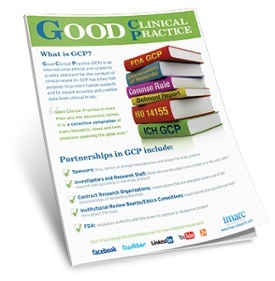
What is Good Clinical Practice?

Do you know why rules, regulations and standards exist? What exactly is Good Clinical Practice and how does this help protect patients and data integrity?

Protecting patients is at the core of clinical research and one of the ways research teams can ensure human subjects are protected is through holding up rules, regulations and standards set forth. Good clinical practice (GCP) is something that encompasses all these things because it is:

Topics: Good Clinical Practice, Human Subject Protection

Posted by John Lehmann on Thu, Jul 19, 2018

Are Clinical Vendor Audits Important?

In today’s business environment, it’s important to have reliable partners who can help you achieve your business goals and objectives. In clinical research, this is especially true. One proactive way to ensure your trial partners are meeting your standards is to conduct vendor audits.

Topics: Ensuring Compliance, Clinical Vendor Audits

Posted by John Lehmann on Wed, Jan 03, 2018

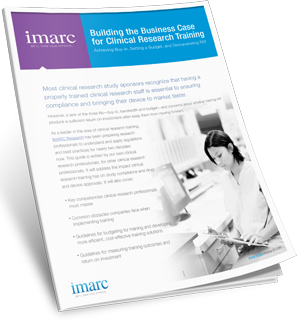
Building the Business Case for Clinical Research Training

Most clinical research study sponsors recognize that having a properly trained research staff is key to ensuring compliance and bringing their device to market faster. The question is, how do you implement an effective training program that achieves your organization’s desired goals?

Topics: Clinical Research Training, Building a Business Case, IMARC University

Posted by John Lehmann on Tue, Jan 10, 2017

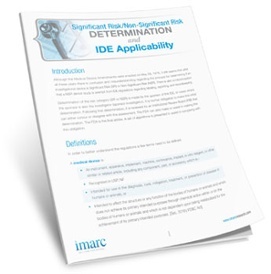
Comparing Significant Risk vs. Non-Significant Risk Studies

What is the difference between Significant Risk studies (SR) and Non-significant Risk studies (NSR)?

Topics: Signficant Risk, Non-Signficant Risk

Posted by John Lehmann on Thu, Jan 05, 2017

ALCOA – A Tool to Document Your Work

When documenting your research observations, it is important to remember the adage, “If it wasn’t documented, it wasn’t done”. As research professionals, we have an obligation to uphold the highest ethical standards and make all possible efforts to comply with Good Clinical Practice. We must take credit for what we do - and to take credit for what we do, we must properly document our work.

Topics: ALCOA, ALCOA Checklist

Posted by John Lehmann on Mon, Jan 15, 2018

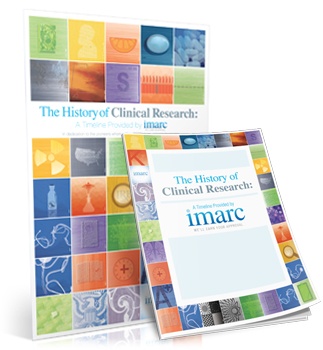
The History of Clinical Research

For research professionals involved in clinical trials, there is an immense responsibility of protecting human subjects, but history has taught us, unethical practice and disregard for the well-being of human subjects has occurred and will continue to occur.

Ensuring accurate and credible data from clinical trials and protection of human subjects is the role of every individual on the research team. The price for compromise is high; history provides an array of haunting reminders of our failure to uphold our obligation to ethical excellence in our work.

Topics: History of Clinical Research Timeline, IMARC Research

Posted by John Lehmann on Mon, Dec 05, 2016

2017 CDRH Regulatory Science Priorities

The Center for Devices and Radiological Health (CDRH) recently issued its fiscal 2017 regulatory science priorities. The list repeats some of the points highlighted in its 2016 list, while surfacing some new issues for consideration.

Topics: CDRH, Regulatory Science Priorities, FY 2017

Posted by John Lehmann on Wed, Jan 03, 2018

10 Keys For Responding to an FDA Warning Letter or Form 483

Each year, IMARC releases a whitepaper listing of the top reasons for FDA warning letters, here is the listing for 2015. Provided below are 10 Tips to consider when responding to a FDA Warning Letter or Form 483: 

Topics: FDA Warning Letters, Form 483

Posted by John Lehmann on Thu, Nov 17, 2016

Compliance with ISO 14155:2011

IMARC Research has created a new whitepaper that highlights the Guidance for Ensuring your Clinical Study is Being Designed, Executed, and Monitored in Accordance with the ISO 14155.2011 International Device Standards. The goal of this paper is to introduce some suggestions on how to set up a study for successful compliance with both the FDA regulations and ISO 14155, giving some practical advice on how these additional ISO requirements can be added.

Topics: ISO 14155:2011, IMARC Whitepaper, Compliance, FDA Regulations

Posted by John Lehmann on Thu, Nov 10, 2016

Why Conduct Clinical Vendor Audits?

In today’s business environment, it’s important to have reliable partners who can help you achieve your business goals and objectives. In clinical research, this is especially true. One proactive way to ensure your trial partners are meeting your standards is to conduct vendor audits.

Topics: Vendor Audits, Ensuring Compliance

Posted by John Lehmann on Thu, Oct 20, 2016

Comparing Drug and Medical Device Clinical Trials

Understanding the similarities and appreciating the differences of drug and medical device clinical trials is important. A well-organized, controlled clinical trial can save time and money. Additionally, the faster and more accurately a trial is performed, the faster the test article can be introduced to the market and begin helping the community.

Read on to learn the similarities and differences between drug and medical device clinical trials.

Topics: Medical Devices

Posted by John Lehmann on Mon, Nov 06, 2017

Drug and Medical Device Clinical Trials 101

Most medical professionals enjoy being on the forefront of new clinical treatments, techniques and products. Drug and device research trials are a great opportunity for those in the healthcare field to learn about and assist in the development of revolutionary ways to treat patients, before they’re introduced to the public. These studies can provide invaluable information and learning experiences to everyone involved.

The responsibility for running a clinical trial is immense, so learning as much as possible about the process is essential for clinical research professionals to effectively contribute. Read on to discover the who, what, why and how of drug and device clinical trials.

Topics: Medical Devices

Posted by John Lehmann on Tue, Oct 18, 2016

A Handy Guide to Medical Device Classifications

A clinical trial is required for all new drugs, but this is not the case for all medical devices. Medical devices start by undergoing a risk assessment in order to determine the severity of potential harm to the user and the probability of that harm occurring. Each device is assigned to one of three classes based on this assessment, and this classification dictates whether or not a clinical trial is necessary.

Topics: Medical Devices

Posted by John Lehmann on Tue, Oct 11, 2016

IMARC Research Opens New Office

IMARC Research has expanded its footprint and opened a new office in the Minneapolis area. The office is located in Minnetonka, Minnesota and will be managed by Jim Moat, Senior Clinical Specialist. He is a Certified Clinical Research Specialist with more than 26 years of experience in medical device product development, having managed all phases of clinical study – from pre-market strategy to post-market surveillance.

Topics: IMARC Research, New Office, Minneapolis Area

Posted by John Lehmann on Wed, Jan 03, 2018

A Solution for your Clinical Training Needs

Is your company struggling with the growing training needs of your clinical staff? Do you lack the staff and time to implement an effective training program? Every company understands the importance of providing training to help your staff grow, but often companies struggle to identify a solution.

Topics: Clinical Training, IMARC University

Posted by John Lehmann on Thu, Sep 22, 2016

ALCOA - The Best Way to Document Your Work

When documenting your research observations, it is important to remember the adage, “If it wasn’t documented, it wasn’t done”. As research professionals, we have an obligation to uphold the highest ethical standards and make all possible efforts to comply with Good Clinical Practice. We must take credit for what we do - and to take credit for what we do, we must properly document our work.

Topics: ALCOA, Checklist

Posted by John Lehmann on Tue, Sep 13, 2016

5 Tips for Meeting the UDI Deadline

The FDA’s Unique Identification program directs that class II device-makers to be compliant with the law by September 24, 2016. Based on this deadline, there is evidence that many manufacturers are unprepared for the next phase of the agency’s UDI rule.

Topics: UDI Deadline, FDA, Linda Sigg

Posted by John Lehmann on Thu, Sep 22, 2016

Site Selection - What to Look For?

Selecting clinical sites for research purposes may be a difficult and seemingly overwhelming task for a sponsor. Familiarity with a site might help with selection, but multiple contributing factors can influence whether or not a site is ultimately chosen. Choosing the wrong sites could have a detrimental effect on the study including: 

Topics: Site Selection, Sponsors

Posted by John Lehmann on Thu, Aug 18, 2016

Adding Value to a Study with Safety Monitoring Oversight

Researchers agree that the highest standards in clinical research need to be preserved to maintain the public’s confidence in their work, competence, and ethics. With patient safety as a primary consideration, the implementation of safety monitoring is paramount. One means of adding this value to a study is utilizing a Data Safety Monitoring Board (DSMB) and/or a Clinical Events Committee (CEC).

Topics: Safety Monitoring, DSMB

Posted by John Lehmann on Thu, Aug 04, 2016

Title 21: 1981

When you visit IMARC Research's office, you will notice beautiful artwork on our lobby wall.  The artwork pays homage to key events in the history of clinical research.  We also released an eBook that describes all the images that make up the timeline and we encourage everyone to take advantage of this important information. 
Topics: FDA Regulations, Title 21

Posted by John Lehmann on Thu, Jul 19, 2018

GCP - What Does it Mean?

Do you know why rules, regulations and standards exist? What exactly is Good Clinical Practice and how does this help protect patients and data integrity?

Topics: Good Clinical Practice, Clinical Research, Infographic

Posted by John Lehmann on Tue, Jul 19, 2016

The Keys to Choosing the Right CRO

In the past we have written blogs providing criteria for selecting a Contract Research Organization (CRO). When you’re a sponsor or investigator and you are faced with the decision of hiring a CRO, picking the right organization can be difficult. Finding the right fit for your organization requires a well thought out process with many key points to consider.

Topics: CRO Selection, Regulatory Experience, Infographic

Posted by John Lehmann on Tue, Jul 12, 2016

Risk Management in Clinical Research

As the regulators continue to raise the bar for quality clinical research investigations, IMARC has released a whitepaper that discusses the principles of risk management and their application to clinical research.

Topics: Risk Management, Clinical Research, FDA

Posted by John Lehmann on Tue, Jul 05, 2016

New Whitepaper: Elements of a Regulatory Inspection

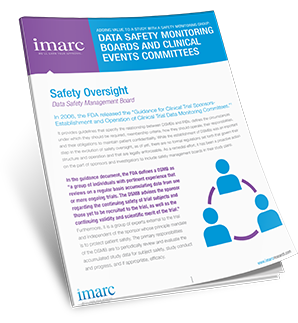
While inspections of studies with pending marketing applications are considered routine, FDA has recently shifted its focus toward an early intervention paradigm. Under this design, BIMO Inspections can occur prior to trial completion. This approach allows FDA the opportunity to affect proactive change and continuously improve clinical investigator compliance. Early intervention inspections can be challenging to predict as the audits are not necessarily triggered by a sponsor regulatory submission.
Topics: IMARC Whitepaper, FDA Inspection, BIMO

Posted by John Lehmann on Wed, Jan 03, 2018

What Makes Good Clinical Research Training?

We have noticed an increase in the demand for training across the clinical research landscape. This should come as no surprise with the constant advances in technology improving the way that clinical research studies are conducted. Those of us involved in this privilege are continually striving to keep up, and continuing education is a regular part our profession. In addition, FDA regulations require that individuals involved in the clinical research process be qualified by training and experience. But what constitutes “adequate” training? This a question often asked of us by the sponsors and investigators we work with.

Topics: Clinical Research Training, IMARC University

Posted by John Lehmann on Thu, Jun 09, 2016

FDA's Device Evaluation Program is Underway

The Food and Drug Administration (FDA) has been working closely with Industry negotiators and other stakeholders for years to establish a National Evaluation System for medical devices. The goal of establishing such an infrastructure is to generate real world evidence to efficiently monitor the long-term safety and effectiveness of medical devices. In the FDA’s Center for Devices and Radiological Health (CDRH) strategic priorities report for 2016-2017, establishing a National Evaluation System for medical devices is a priority, however according to the CDHR Director, Dr. Jeffrey Shuren the system may not be ready until fiscal year 2023, if the agency cannot secure funding.

According to an article in The Gray Sheet, it mentioned that Dr. Shuren received assurance from the FDA’s Commissioner, Dr. Robert Califf that the agency will provide the initial funding for a coordinating center that would help build the system. However, the money will only be provided if additional funding is forthcoming from Congress or increased user fees, which are being negotiated in the Medical Device User Fee Act (MDUFA IV).

Topics: CDRH, NEST, National Evaluation System

Posted by John Lehmann on Wed, May 18, 2016

FDA Outlines MDUFA Proposal Cost

After several months of deliberation, the FDA has put some hard numbers to how much the proposed user fee reauthorization act (MDUFA IV) would cost. The agency has indicated the price tag of the reforms at $500 million over five years on top of the current user fee base. This does not take inflation into account.

The FDA had initially estimated it would cost and extra $456.4 million over five years. However, after more analysis the agency update the estimate according to January 27th meeting minutes.

Topics: MDUFA, FDA

Posted by John Lehmann on Fri, Jun 03, 2016

5 Hurdles to Overcome When Planning a Clinical Trial

The planning stage is critical to the success of any clinical trial. It sets expectations for how your team will work together to collect data, monitor results, protect human subjects and much more.

In effect, it sets the standards for your entire trial, so it’s essential to get it right from the start. However, the planning stage is most often when progress stalls before it even begins. Clinical professionals encounter a number of hurdles that can slow momentum, delay approval or even compromise the integrity of the study if they aren’t addressed.

Here are five of the most common hurdles your team is likely to face when planning a clinical trial and how to overcome them.

Topics: Clinical Research

Posted by John Lehmann on Mon, May 23, 2016

Learning to Trust the Process

Merriam Webster defines a case study as a published report about a person, group, or situation that has been studied over time; also : a situation in real life that can be looked at or studied to learn about something. Case studies can be useful to help highlight how to handle a particular situation, including the eventual outcome.

Topics: Case Study, FDA Audit, Trust the Process

Posted by John Lehmann on Mon, May 23, 2016

Good Clinical Practice: From Review to Applications

In clinical research many rules and regulations exist to govern the way research is conducted and to protect those patients who are participating in research. One of the standard principles directing clinical research is Good Clinical Practice. Good clinical practice is more than any one document; rather, it is a collective compilation of many thoughts, ideas and learning moments spanning the globe over.

Good clinical practice is an attitude of credible excellence in research that provides a standard for clinical study design, implementation, conduct and analysis. Furthermore, good clinical practice is a mind-set that is absolutely essential to the protection of patients’ rights and the assurance of data integrity. Many of these lessons stem from some of the tragedies in the history of clinical research which has formed and shaped much of the frame work today.

Topics: Good Clinical Practice, Whitepaper, IMARC Research

Posted by John Lehmann on Fri, Apr 08, 2016

An Infographic: Comparing Drugs and Devices Trials

Several year ago, IMARC Research published a whitepaper outlining the differences between Drug and Medical Device clinical trials.  Since IMARC focuses primarily on medical device trials, we felt it was important to highlight the differences between the two trials.  It has proven to be one of our more popular whitepapers, so we have decided to offer everyone an infographic as a quick reference.

Topics: Drugs vs. Devices, IMARC Research, FDA

Posted by John Lehmann on Mon, Jan 15, 2018

The History of Clinical Research eBook

For clinical research professionals, the protection of human subjects has always been of paramount importance.  Doing so while ensuring accurate and credible data are obtained are the primary roles for every individual on a research team.  Unfortunately, history reminds us that unethical research practices and/or disregard for the well-being of human subjects has not only occurred in the past, but continues to do so today.

Topics: History of Clinical Research, eBook, IMARC Research

Posted by John Lehmann on Thu, Mar 24, 2016

In Vitro Diagnostics: The Basics

It has been estimated that In Vitro Diagnostics (IVD) will play a role in around 70% of health care decisions, and market estimates predict the IVD market will be close to 75 billion dollars in 2010.  The role of IVDs in health care decisions should only continue to grow as healthcare shifts away from a “one-size-fits-all” model.  Furthermore, developments in technology and the scope and precision of some of these devices have led to the evolution of the IVD field and with it, the role the FDA has played in regulating these devices. 

Topics: IVD, FDA, IMARC Research Whitepaper, In Vitro Diagnostics

Posted by John Lehmann on Wed, Jan 03, 2018

Clinical Training: A Blueprint for Success

Having a well-trained clinical research staff is vital to ensuring compliance and securing regulatory approval.  Providing training solutions for continuous improvement, understanding industry best practices and new clinical developments – is vitally important to employees.  Yet many medical device companies face challenges on how best to provide high-quality training programs for their clinical departments. 

Topics: Clinical Training, Clinical Research Staff, Medical Devices

Posted by John Lehmann on Fri, Mar 04, 2016

A Recipe for a Successful Study Start-up

There are many factors that go into a successful clinical study start-up.  Having the proper team assembled can be a critical factor in the success of any study. Choosing the right site is another factor that can make or break a successful study start-up.  Having a research coordinator and principal investigator that are engaged is important too. 

Topics: Study Start-up, IRB, Sponsor, Site Staff

Posted by John Lehmann on Fri, Jun 03, 2016

Why Do We Need to Audit?

How is auditing different than monitoring? Why do we need to audit? Since these questions are so often asked, we decided to create a graphic that will help you understand when to consider an audit. In short, auditing brings an independent, quality assurance perspective to the clinical research landscape Investigational sites, sponsors, and vendors benefit from high-level process assessments and improvements. Experienced auditors leverage extensive training to help ensure subject safety, data integrity, and protocol and regulatory compliance.

Topics: Auditing, Quality Assurance, Clinical Monitoring

Posted by John Lehmann on Fri, Jan 29, 2016

FDA Hits User-Fee ERA Record

The number of original PMAs for completely high-risk devices and panel track supplements for major new updates approved by the FDA, was at its highest level since 2001.  Approvals increased to 56% in 2015 compared to the previous year and almost double the 2013 total.

So is this the new normal or just a one-year spike? 

Topics: FDA, CDRH, William Maisel, User Fee, Paul LaViolette

Posted by John Lehmann on Mon, Jul 09, 2018

A Question of Disclosure: FDA Findings and Publications

When the Food and Drug Administration (FDA) identifies significant findings with the conduct of a clinical trial during an inspection, what happens to those findings? According to a article published online by JAMA Internal Medicine, those findings remain hidden in plain sight.

Charles Seife, MS, a professor at the Arthur L. Carter Institute of Journalism at New York University, conducted a research study that sought to “identify published clinical trials in which an FDA inspection found significant evidence of objectionable conditions or practices, to describe violations, and to determine whether the violations are mentioned in the peer-reviewed literature.”

Topics: Charles Selfe, FDA Warning Letters, FDA Inspection

Posted by John Lehmann on Fri, Apr 08, 2016

Significant Risk vs. Non-Significant Risk Determination

Dr. Harvey Arbit of Arbit Consulting has penned a whitepaper for IMARC Research titled, “Significant Risk/Non-Significant Risk Determination and IDE Applicability.”  Although the Medical Device Amendments were enacted on May 28, 1976, it still seems that after all these years there is confusion and misunderstanding regarding the process for determining if an investigational device is Significant Risk (SR) or Non-Significant Risk (NSR).

Topics: Dr. Harvey Arbit, Signficant Risk, Non-Signficant Risk, FDA

Posted by John Lehmann on Mon, Jan 15, 2018

The History of Clinical Research eBook

For clinical research professionals, the protection of human subjects has always been of paramount importance. Doing so while ensuring accurate and credible data are obtained are the primary roles for every individual on a research team. Unfortunately, history reminds us that unethical research practices and/or disregard for the well-being of human subjects has not only occurred in the past, but continues to do so today.

Topics: Sandra Maddock, History of Clinical Research, IMARC Research

Posted by John Lehmann on Thu, Dec 10, 2015

Combination Product Pathway

During his November 17th conformation hearing at the Senate Health, Education, Labor and Pensions Committee FDA commissioner nominee Robert Califf indicated that the FDA could have a new combination pathway ready for approval within a year.  He is trying to replace Margaret Hamburg, who left the FDA back in April.

During the hearing Califf agreed that the FDA’s existing structure for reviewing combination products is not suitable.  “It’s a strong view at the FDA that we need another pathway that will give the FDA the flexibility to require the data that’s needed to ensure the public the proposed treatment is safe and effective.

Topics: Combination Products, FDA, Robert Califf, Product Pathway

Posted by John Lehmann on Tue, Dec 08, 2015

Using Risk Management in Clinical Research

Please take time to view Emily Haglund’s article “Risk Management in Clinical Research Process and Application” that was recently posted on GxP Lifeline.  The applicable guidances for good clinical practice (GCP), ICH E6 and ISO14155, state explicitly that the sponsor is responsible for quality assurance and quality control. One aspect of quality involves how risks are approached and managed throughout the course of a clinical trial, and is the focus of this article.

Topics: ISO 14155, Risk Management, GxP Lifeline

Posted by John Lehmann on Thu, Nov 19, 2015

IMARC Expand Service Offerings

IMARC Research has launched independent oversight capabilities by adding Data Safety Monitoring Boards (DSMBs) and Clinical Events Committees (CECs) to its existing monitoring, auditing, training, project management and consulting services.

Topics: Sandra Maddock, IMARC Research

Posted by John Lehmann on Mon, Nov 02, 2015

ALCOA - The Best Way to Document Your Work

 When documenting your research observations, it is important to remember the adage, “If it wasn’t documented, it wasn’t done”.  As research professionals, we have an obligation to uphold the highest ethical standards and make all possible efforts to comply with Good Clinical Practice. We must take credit for what we do - and to take credit for what we do, we must properly document our work.

Topics: 21 CFR 58.130 (15), ALCOA Checklist, FDA

Posted by John Lehmann on Mon, Nov 06, 2017

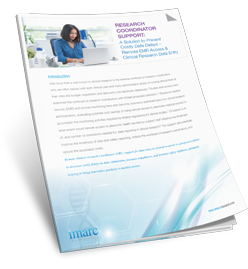
Research Coordinator Support: Preventing Costly Data Delays

The extreme workload of research coordinators is well documented in the clinical research industry. Clinical Research Coordinators (CRCs) are often tasked with clinical care and administrative duties – like budget negotiation and data entry into electronic databases.   This intense workload frequently impacts the timeliness of data entry and safety reporting.

Topics: IMARC Whitepaper, Research Coordinator Support

Posted by John Lehmann on Fri, Oct 02, 2015

The Sponsor-Investigator: Wearing Two Hats

You may have heard the term Sponsor-Investigator before, but just who are they and what do they do?  Just as the title suggests, a Sponsor-Investigator is someone who both initiates (sponsors) and conducts (investigator) an investigation.  This may sound simple, but in actuality, the role can be quite complicated.  However, like anything else, with proper preparation and support it can be accomplished.  Sponsor-Investigators are a rare breed of extremely intelligent, hardworking people who are on the cutting edge of scientific advancement in their respective fields.  They are so committed that they are willing to do essentially twice the work to bring new technologies and advancements to the medical community.

Topics: Sponsor-Investigator, FDA

Posted by John Lehmann on Tue, Sep 01, 2015

Conducting a Well-Controlled Clinical Study When Clinical Data is Required

There continues to be much discussion over the FDA’s 510(k) program, which has led to controversy and confusion over the direction of the program. In fact, we have posted many blogs devoted to this topic, so we thought it was time to create a whitepaper focusing on the topic.

Topics: 510(k) Program, IMARC Whitepaper, FDA

Posted by John Lehmann on Tue, Aug 25, 2015

Trust the Process – A Case Study

Merriam Webster defines a case study as a published report about a person, group, or situation that has been studied over time; also : a situation in real life that can be looked at or studied to learn about something.  Case studies can be useful to help highlight how to handle a particular situation, including the eventual outcome.

Topics: FDA Audit, FDA Inspection, BIMO

Posted by John Lehmann on Wed, Aug 19, 2015

Back Translations

On a recent monitoring visit, the coordinator asked an IMARC monitor if the study sponsor could have their consent translated into Spanish. However, the site had one caveat – their IRB also required a “back translation” of the translated consent. Why would the IRB require this back translation?

Topics: Consent, Back Translation, Section 50.20

Posted by John Lehmann on Thu, Aug 13, 2015

Why Do We Need to Audit?

How is auditing different than monitoring? Why do we need to audit? Since these questions are so often asked, we decided to create a graphic that will help you understand when to consider an audit. In short, auditing brings an independent, quality assurance perspective to the clinical research landscape Investigational sites, sponsors, and vendors benefit from high-level process assessments and improvements. Experienced auditors leverage extensive training to help ensure subject safety, data integrity, and protocol and regulatory compliance.

Topics: GCP, Auditing, Quality Assurance

requestconsult-bg.jpg
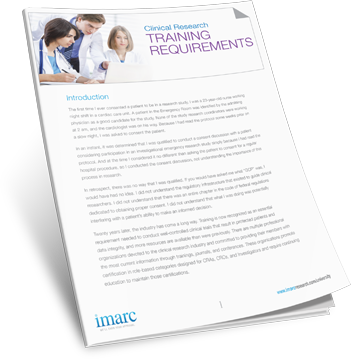
Clinical Research Training Requirements
Featured Resource

clinical research Training requirements

This whitepaper examines the similarities and differences between various US and international regulations and place them within the context of any number of roles found within the realm of clinical research.