The COVID-19 pandemic has dramatically changed clinical research as we know it, forcing many clinical researchers to re-evaluate their priorities.
Topics: Clinical Monitoring



You want to keep your trial on track, but physical distancing and travel restrictions have made it difficult. Fortunately, IMARC has experience providing remote services.

The COVID-19 pandemic has dramatically changed clinical research as we know it, forcing many clinical researchers to re-evaluate their priorities.
Topics: Clinical Monitoring

Recent developments in remote clinical trial monitoring indicate it might soon become part of the standard process for researchers.
Some of these developments have been visible to industry observers for the past decade. Others have been brought about by the global coronavirus pandemic.
Here’s an update on the state of remote monitoring of clinical trials.
Topics: Clinical Monitoring
As a global medical device CRO, monitoring has been at the core of our mission at IMARC since the company was founded over 20 years ago.
Topics: Clinical Monitoring
You already know monitoring is a critical part of protecting patients, ensuring compliance and maintaining data integrity in clinical research.
Topics: Clinical Monitoring
The annual ACRP meeting will be held April 12th – 15th, 2019 at the Nashville Music City Center in Nashville, TN. This meeting brings together clinical research personnel from various backgrounds and provides them with the opportunity to share their expertise as well as obtain knowledge across the clinical research landscape. IMARC will be presenting on Sunday, April 14th, from 3:15 – 4:15 on identifying, documenting, and implementing corrective action plans to improve site compliance from a CRO perspective.
Topics: ACRP Conference, Corrective Action Plans

As monitors we spend a significant amount of time reviewing the essential documents at the site during a monitoring visit. The essential documents are usually housed in a Regulatory Binder or sometimes they are referred to as an Investigator Binder.
Topics: Monitor, Regulatory Binder, Essential Documents, Sites

Since the suicide death of Dan Markingson in May of 2004, there has been a lot of debate as to whether or not the 26 year old psychiatric patient should have been approached to consent to participate in a clinical research trial for the comparison of three atypical antipsychotic drugs. Recently, there has been an article published in the Minnesota Daily about a petition signed by over 3,000 ethicists, researchers and scholars asking the University of Minnesota’s President to review the case to prevent future tragedies at the institution. Such a petition was created due to several errors in processes related to human subject protection.
Topics: FAIR Shake, University of Minnesota, Dan Markingson, IMARC Research

In the world of clinical research, many of us have heard of Bristol-Myers Squibb (BMS), a well-known global biopharmaceutical company. In a recent article online at Applied Clinical Trials, Thomas Verish, Group Director of Data Operations Services, discusses the risk-based monitoring (RBM) strategy that Bristol-Myers Squibb has begun using.
Topics: Good Clinical Practice, Risk-Based Monitoring, Brystol-Myers Squibb, Applied Clinical Trials

As the clinical research world becomes increasingly technologically advanced, we have seen more and more sponsors choose to use Electronic Data Capture (EDC) Systems to document Case Report Form (CRF) data. FDA published a guidance in September 2013 to address the questions associated with this growing trend.
Topics: FDA Guidance, Electronic Data Capture, Principal Investigators, IMARC Research

The World Health Assembly is the decision-making body of the World Health Organization (WHO). This assembly draws leading government health officials from the 194 WHO member nations and was first convened in 1948 shortly after the WHO was created. On 24 May 2014, the 67th annual World Health Assembly closed. This close marked the end to a five day meeting that featured a record-breaking number of agenda items, documents and resolutions, and almost 3,500 registered delegates. During the assembly more than 20 resolutions on important global public health issues were adopted. These adoptions ranged from issues relating from antimicrobial drug resistance and access to essential medicines to addressing the global challenge of violence and the public impact of exposure to mercury and mercury compounds. Of note, is the passage of a resolution to strengthen regulatory systems.
Topics: Medical Devices, World Health Organization, World Health Assembly, Regulations

As we in this industry are aware, turnover from both the sponsor and/or monitoring CRO is extremely high compared to other fields of service. In order to have a monitor turnover rate lower than the industry standard, companies should recognize the importance of minimizing turnover whenever possible and proactively adapt strategies to do so. However, in the event when turnover does occur, companies should also strive to make the transition to a new monitor as smooth as possible for both the sponsor and site(s).
Topics: Monitor Turnover, How to Minimize, IMARC Research
Topics: Informed Consent, FDA, Clinical Research

In the current issue of ACRP's The Monitor, there is an interesting article regarding a different approach for monitoring federally-funded studies. In an effort to reduce cost and increase efficiency in regards to monitoring federally-funded studies, groups such as the Cardiovascular Cell Therapy Research Network (CCTRN) have been created. The CCTRN was established by the National Heart, Lung, and Blood Institute (NHLBI) with the goals to “develop, coordinate, and simultaneously conduct multiple collaborate trials testing the effects of cell therapy in cardiovascular disease”. The article states that there was a particular goal to assist in investigator-initiated studies.
Topics: Cell Therapy, Cardiovascular Cell Therapy Research Network, ACRP

Should women be treated differently than men in regards to medical device trials? According to this recent medical news statement, the FDA feels that more should be done to ensure that an adequate number of women are enrolled in post-approval studies, to analyze any potential differences caused by gender. The Journal of Women's Health recently published an article entitled Enrollment and Monitoring of Women in Post-Approval Studies for Medical Devices Mandated by the FDA.
Topics: Women, Post Approval Studies, Medical Studies, FDA
You’ve received “the call” from the FDA auditor. After an understandable quick moment of panic, what should your next steps be?
Topics: Form 483, Audit Prep, BIMO Checklist, FDA

A recent MedCity News article discussed the story of a medical school actor who was surprisingly diagnosed with a serious condition. When I first heard of this news story, I thought it was interesting to hear about the common practice of medical schools hiring actors to portray patients with different illnesses, to help train medical students. In this case at the University of Virginia, the patient actor was told to pretend to have symptoms of an abdominal aortic aneurysm. In fact, the resident physician in training who performed the mock exam actually helped diagnose the “patient” with the same condition he was actually portraying!
Recently, the National Institutes of Health (NIH) published this article regarding renal artery stenting, a common surgical procedure to treat patients with renal artery stenosis. As noted in the article, renal artery stenosis occurs in 1 – 5 % of people who have hypertension, an extremely common disorder affecting approximately 78 million Americans. For those with hypertension who exhibit signs of renal artery stenosis, many times the renal arteries are stented, to prevent further injury to the kidneys. When untreated, renal artery stenosis can lead to chronic kidney disease, which comes with its own symptoms and comorbidities.
Topics: NIH, Renal Artery Stenting, Artery Stenosis
It is usually not very difficult to engage sites who have been chosen to participate in a clinical study at the beginning of the trial. This is an exciting time for any site that is able to bring that new experimental drug or device to their patients who are able to participate in the study! Many times, during the enrollment phase of the study, sites continue to be excited and active in their roles, and this is usually facilitated by sponsors who are actively encouraging their sites to enroll subjects.
Topics: Clinical Study, Site, Regulations, Clinical Monitoring

The FDA defines pediatric medical devices as those that “treat or diagnose diseases and conditions from birth through age 21”. As many are aware, the medical device industry has a continuing lack of approved devices for pediatric use. This is due to a variety of barriers, as noted in this 2004 Report to Congress, such as the small market for these devices, difficulty in obtaining clinical data for FDA approval, and increased liability for working such this vulnerable population. The FDA has formed a Pediatric Device Consortia (PDC) Grant Program specifically to support the development of pediatric device innovation. IMARC recently published a blog on this topic, discussing how the PDC FDA group has provided funding to several chosen non-profit organizations and research consortia in an attempt to jumpstart the advancement of new pediatric devices.
Topics: Pediatric Medical Devices, FDA, PMA
Clinical research trials have a multitude of stakeholders. For the monitor, though, our first and most important priority is the human research subjects who have altruistically volunteered to participate in these trials. Our goal is to ensure that the rights, safety, and well-being of clinical trial subjects are being maintained. We remember the ethical principles as outlined in the Belmont Report- respect for persons; beneficence, and justice- as we travel all around the world to investigative sites conducting clinical research trials to ensure that they are being conducted appropriately.
Topics: Federal Regulations, Human Subjects Protection, IMARC Monitors
In our recent blog , we discussed the backlog of clinical trial submissions the FDA now faces, which was caused by the temporary government shutdown. The articles cited in that blog focused on the impact of new FDA submissions, and particularly on the detrimental effects to start-up companies. However, how have ongoing clinical trials been affected during this time period? More importantly, how have the lives of the patients on the other side of that experimental drug or device been affected?
Topics: Government Shutdown, National Institute of Health, FDA

I recently came across this article describing the benefits to having a shortened informed consent form. As a monitor who has had experience with reviewing informed consents, as well as a former research coordinator who has obtained consent from study participants, I have mixed feelings on the topic.
Topics: Informed Consent, Johns Hopkins University, Clinical Research


As noted in our previous blog, in most cases when a monitor or CRO is brought into a clinical research study, the protocol, case report forms, and informed consent template have already been finalized. Moreover, some or all investigative sites may have already received IRB approval of their protocol and informed consent document. As noted in 21 CRF Part 812.42, the sponsor is required to have all study documents approved by the participating institution’s IRB. The IRB, on the other hand, is required to review clinical research activities, as noted in 21 CFR 56.109.
Topics: CRO, Monitor, IFC Checklist, IRB Approval
Frequently, by the time a monitor or CRO is brought into a clinical research study, the protocol, case report forms, and informed consent template have been finalized. As noted in 21 CRF Part 812.42, the sponsor is required to have all study documents approved by the participating institution’s IRB. As the sponsor is working to create their informed consent document, they likely reference 21 CFR Part 50, specifically incorporating all of the required elements of informed consent into their template.
Topics: Informed Consent Checklist, IRB Submission, Clinical Monitoring
Anyone who has been in a position with a traveling job, a.k.a. a “road warrior”, will tell you that it is not easy. In the world of clinical research, monitor turnover is high, as discussed in this previous blog.
Topics: Travel, CRA, Work/Life Balance

As a monitor working at a clinical research organization (CRO), we partner with sponsors who, many times, have their own internal clinical research associates (CRAs) involved with the same studies. At the very least, each sponsor has a project manager for that trial. Both the internal sponsor project manager and/or CRA and the external field CRA at the CRO want to work together to make monitoring the study as efficient and effective as possible.
Topics: Internal CRA, External CRA, Clinical Research Organization, Sponsor

In an article published last week in MedCity News, the author quoted a survey, stating that clinical trials would get more participants if doctors informed their patients about them.
Topics: Investigator, Clinical Trial Recruitment, MedCity News
Most people are familiar with the term placebo effect, in which patients experience beneficial symptoms associated with a specific treatment, even when they are given an ineffectual treatment, or “placebo”. Recently, this New York Times article discussed the opposite medical phenomena known as the nocebo effect. The nocebo effect is defined as:
Topics: Clinical Studies, The Nocebo Effect, New York Times, New Symptom
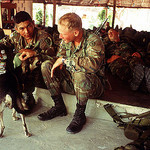
Joining the military in America is, by some, considered the most patriotic duty one can fulfill; a noble and brave decision made by young men and women to protect and fight for our country.
Topics: Good Clinical Practice, Informed Consent, Edgewood Arsenal Experiments, U.S. Military

A recent MedCity News article outlined several steps drug and device companies may use to successfully transport their product from the preclinical stage into clinical trials. The article stressed the importance of communication when attempting to enter a drug or device into the clinical stage of development. Communication was broken down into several guidelines for companies to follow:
Topics: Preclinical Communications Strategies, FDA

Several weeks ago, I came across a Dateline NBC episode, which was entitled The Hansen Files: Drug Trials. The episode focused on clinical drug trials, which were being conducted outside of the United States, particularly in India. There is a growing trend for companies in the U.S. to outsource recruitment into their clinical trials.
Topics: Clinical Drug Data, Dateline