

<img height="1" width="1" style="display:none" src="https://www.facebook.com/tr?id=213807269037206&ev=PageView&noscript=1">
Blog

Compliance In Focus

remote services

LEARN MORE ABOUT REMOTE SERVICES

Keep Your Clinical Trial Moving from a Distance

You want to keep your trial on track, but physical distancing and travel restrictions have made it difficult. Fortunately, IMARC has experience providing remote services.

FILTER BY:

Newest Post

Posted by Anna Eggleston on Mon, Jun 22, 2020

Organizing Tips for Research Coordinators

Research coordinators are the reason that many clinical trials are successful.

Setup, screening, enrollment, data collection, and regulatory maintenance are just a few tasks that coordinators manage for their study teams and investigators. The best research coordinators possess an attitude of credible excellence and a combination of learned/innate skills. Organization is key. Below are a few tips we have picked up from research coordinators over the years to help keep their studies organized.

Topics: Clinical Research
Posted by Ashton Steinhagen on Tue, Mar 10, 2020

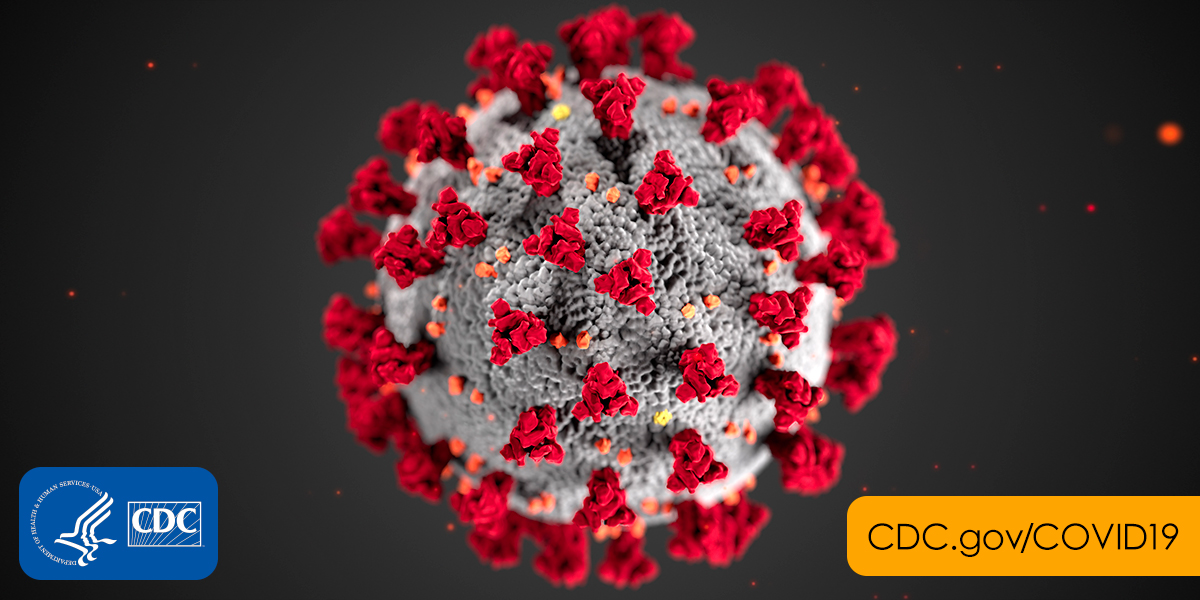
The Coronavirus (COVID-19) and Clinical Research


With the uncertainty of the coronavirus (COVID-19), the impact of this global health issue remains to be seen. Recently, the FDA issued a news release indicating that together with help from the centers for disease control (CDC), they are trying to make more respirators available for health care personnel. The CDC requested emergency use authorization (EUA) which would allow the use of certain industrial respirators in the healthcare setting. These normally would not be approved for use in the clinical setting; however, the FDA stated that “…they may be effective in preventing health care personnel for airborne exposure, including the COVID-19.” As more cases continue to develop locally as well as abroad, more directives and urgent measures may occur.

Topics: Clinical Research, The Coronavirus, COVID-19

Posted by Brandy Chittester on Thu, Feb 13, 2020

What Makes A Well-Controlled Clinical Trial?

A well-controlled clinical trial is much like a well-controlled experiment: They are both rooted in the cornerstone of the scientific method.

Fortunately for sponsors and their research teams, the FDA gives explicit guidance on what it means to run an adequate and well-controlled clinical trial in 21 CFR 314.126. 

Let's take a closer look. 

Topics: 21 CFR 314.126, FDA, Clinical Research

Posted by Ashton Steinhagen on Tue, Jan 07, 2020

What Impact Will Technology Have on Clinical Research

Recently, a news article in the New York Times highlighted some of the new and innovative ways that tech companies are moving into the health care market. Tech companies like Apple, Google, and Microsoft have already begun to explore this market with a variety of different platforms. Apple is utilizing and creating research apps while acquiring several health startup companies, including Tueo Health, Gliimpse and many others. One study Apple is currently conducting is exploring if there is an early way to identify heart health issues in relation to exercise at Brigham and Women’s Hospital in Boston, Massachusetts. They are doing this with the help of wearable technology that captures and details heart rate with physical activity. Microsoft is focusing on voice recognition software within hospitals to allow for more focused and direct patient care. Google is also looking to explore this market, specifically focusing on compiling patient data to help improve care by a multitude of different approaches. One thing all these companies are looking to achieve is to see if there are better ways to predict, treat, and analyze medical conditions.

Topics: Clinical Research, Technology, Data Collection

Posted by Brandy Chittester on Thu, Jun 27, 2019

A Foolproof Approach To Clinical Research Training: The FAIR Shake™ Method


Although there are no formal requirements for clinical research training, it's an important step to conducting studies in accordance with federal regulations. 

Everyone involved in a clinical trial—from the sponsor and principal investigator to research coordinators and monitors—must have a fundamental understanding of these regulations so they can address concerns that will inevitably arise during the study. 

To guide researchers through the complex maze of regulations, IMARC developed clinical research training known as The FAIR Shake™ program.

Here's a closer look at what's covered in The FAIR Shake and how to apply it to your next trial. 

Topics: FAIR Shake™ Training Method, Clinical Research

Posted by Brandy Chittester on Tue, May 07, 2019

30 Clinical Research Trial Acronyms You Need To Know

Making sense of the many clinical research trial acronyms sometimes feels like swimming in alphabet soup.

After you've been in the field for some time, using these abbreviations often becomes second nature. But for those who are new to this industry, understanding these clinical research acronyms can seem daunting. 

If you need help decoding them, we're here to help. Here are 30 acronyms commonly used in clinical research and what they mean. 

Topics: Clinical Research, Clinical Monitoring, Acronyms

Posted by John Lehmann on Thu, Mar 14, 2019

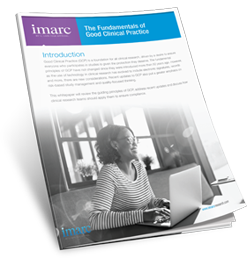
The Fundamentals of Good Clinical Research

ood Clinical Practice (GCP) is a foundation for all clinical research, driven by a desire to ensure everyone who participates in studies is given the protection they deserve. The fundamental principles of GCP have not changed since they were introduced more than 50 years ago. However, as the use of technology in clinical research has evolved to include electronic signatures, records and more, there are new considerations.

Topics: Good Clinical Practice, Clinical Research, IMARC Research Whitepaper

Posted by Rachel Martukovich on Mon, Jan 21, 2019

Critical Impacts of the Government Shutdown on the FDA and Clinical Research

The recent partial government shutdown, which is now the longest in US history, has various stakeholders in the medical device and pharmaceutical industries concerned with the potential impact on the world of clinical research. The FDA is one of the federal agencies most affected, as the budget for fiscal year 2019 is on hold until the shutdown ends and Congress can appropriate funds. FDA Commissioner Scott Gottlieb recently tweeted that “The lapse in funding represents one of the most significant operational challenges in FDA’s recent history…It’s not business as usual at FDA. Many key functions aren’t getting done”. Approximately 40% of FDA employees have been furloughed since December 22nd due to the shutdown. The reduced staff at the FDA has been allowed to continue performing specific duties associated with the regulation of clinical research using funding generated from carry-over user fee balances that were paid in 2018. As part of the review process for new medical device registration applications, the FDA charges what is known as Medical Device User Fees . Each type of FDA submission has an accompanying fee that must be paid by medical device companies in order for an application to be reviewed, such as $10,953 for a 510(k), $11,275 for an Annual Report, or $322,147 for a Premarket Approval Application (PMA). Similarly, under the Prescription Drug User Fee Act (PDUFA), user fees are charged for the review and approval of new pharmaceuticals, such as $2,588,478 for a new drug application when clinical data is required. While the FDA has been able to continue to carry out existing reviews that were funded during fiscal year 2018, this cannot serve as a long term solution as these funds are finite. The FDA Commissioner has already cautioned that agency funds from PDUFA user fees may run dry within a month’s time and medical device user fees may be close behind with only two-three months of funding remaining. Below are additional impacts related to the shutdown.

Topics: Government Shutdown, FDA Backlog, FDA, Clinical Research

Posted by John Lehmann on Thu, Nov 16, 2017

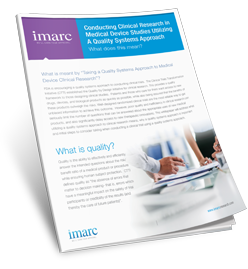
Conducting Clinical Research Utilizing a Quality Systems Approach

FDA is encouraging a quality systems approach to conducting clinical trials. The Clinical Trials Transformation Initiative (CTTI) established the Quality by Design initiative for clinical research. Patients and those who care for them want access to new drugs, devices, and biological products as quickly as possible, while also being assured that the benefits of these products outweigh the risks.

Topics: Medical Device Studies, Clinical Research, Quality Systems

Posted by John Lehmann on Wed, Aug 30, 2017

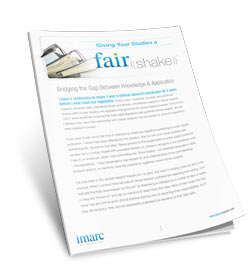
Giving Your Studies a FAIR Shake

I was talking with a professional colleague recently, who referenced IMARC Research’s FAIR Shake™ method as a tool she uses regularly in her clinical research activities. It prompted me to feature our whitepaper on the FAIR Shake™ training program. Even though it is one of our older papers, it is still a useful tool for clinical research professionals. This technique helps you bridge the gap between knowledge and application.

Topics: FAIR Shake technique, Clinical Research

Posted by John Lehmann on Thu, May 11, 2017

Importance of Clinical Vendor Audits

In today’s business environment, it’s important to have reliable partners who can help you achieve your business goals and objectives. In clinical research, this is especially true. One proactive way to ensure your trial partners are meeting your standards is to conduct vendor audits.

Topics: Clinical Research, Vendor Audits

Posted by Brandy Chittester on Wed, Apr 19, 2017

Five Skills that Make a Great Monitor

Clinical Monitors sometimes have a challenging job; they are often on the road, trying to balance work and home life.  They juggle multiple studies from different Sponsors, have many relationships to maintain, sites to visit, and reports to write.  At IMARC we want to always provide the very best monitoring services we can.  In order to do that we must have great monitors on staff, so, what makes a great Monitor?

Topics: Clinical Monitors, Clinical Research

Posted by Carla Glass on Fri, Feb 03, 2017

Volunteering for Clinical Research: What You Need to Know About the Informed Consent Process

Medical research has led to many important medical discoveries that make our lives better. When medical research studies are completed, researchers can share the information with the medical community around the world at conferences or via peer-reviewed journals; and the results of these studies often help doctors provide better and more improved care to their patients.

Topics: Informed Consent, Clinical Research, Volunteering

Posted by John Lehmann on Thu, Jul 19, 2018

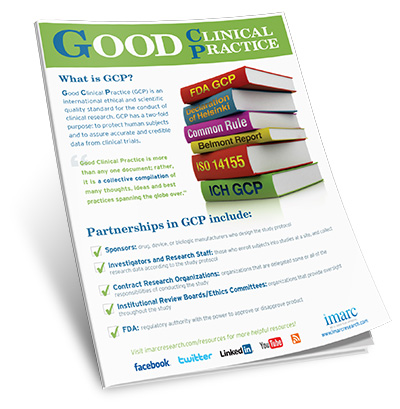
GCP - What Does it Mean?

Do you know why rules, regulations and standards exist? What exactly is Good Clinical Practice and how does this help protect patients and data integrity?

Topics: Good Clinical Practice, Infographic, Clinical Research

Posted by John Lehmann on Tue, Jul 12, 2016

Risk Management in Clinical Research

As the regulators continue to raise the bar for quality clinical research investigations, IMARC has released a whitepaper that discusses the principles of risk management and their application to clinical research.

Topics: Risk Management, FDA, Clinical Research

Posted by Victoria Sawczak on Mon, Nov 06, 2017

The Real Costs of Clinical Research

In 1996 The University of Rochester was offering $150 to volunteers for what was designed to be a minimal-risk research study. To 19-year-old Nicole ( Hoiyan ) Wan, a hundred and fifty dollars meant being able to afford a trip home to see her parents in Queens, New York. Nicole, like many college students, found the money offered on a campus flier for participation in the clinical research study to be extremely enticing. Back in Queens, New York, Mr. and Mrs. Wan were unaware of their daughter’s intention to enroll in any study.

Topics: New York Times, Clinical Research, Nicole Wan

Posted by John Lehmann on Fri, Jun 03, 2016

5 Hurdles to Overcome When Planning a Clinical Trial

The planning stage is critical to the success of any clinical trial. It sets expectations for how your team will work together to collect data, monitor results, protect human subjects and much more.

In effect, it sets the standards for your entire trial, so it’s essential to get it right from the start. However, the planning stage is most often when progress stalls before it even begins. Clinical professionals encounter a number of hurdles that can slow momentum, delay approval or even compromise the integrity of the study if they aren’t addressed.

Here are five of the most common hurdles your team is likely to face when planning a clinical trial and how to overcome them.

Topics: Clinical Research

Posted by Paul Cobb on Thu, Apr 07, 2016

Enhancing Relationships between Monitors and Research Coordinators

 The relationship between a clinical research monitor and site coordinator can play a major role in ensuring data integrity and compliance with applicable regulations. Positive relationships can foster timely data entry, rapid resolution of queries, and adherence to FDA regulations. On the other hand, strained relationships can delay data entry, prevent resolution of queries and lead to sites being less inclined to follow regulations. The coordinator-monitor relationship is critical to the research process as it serves as a link between sponsors, investigators, and regulatory authorities.

How can we ensure that these relationships are optimized?

Topics: Clinical Research, Site Coordinator, Clinical Research Monitor

Posted by Toni Hegyi on Fri, Dec 18, 2015

Enrolling Employees or Clinic Staff: Is it Acceptable?

Little discussion can be found around the question of whether or not employees of an institution should be permitted to participate as subjects in human research conducted by the institution they work for. To date, there is no specific guidance (protection/provisions) provided by the federal regulations governing research with human subjects. The Office for Human Research Protections (OHRP) presents consideration around students, employees, and normal volunteers in Chapter VI, “Special Classes of Subjects,” of its IRB Guidebook. Similarly, the Centers for Disease Control and Prevention (CDC) offers guidance for employee participation in research. While the enrollment of employees is allowed, there is a potential for fundamental ethical provisions to be compromised. Both the study sponsor and the Institutional Review Boards (IRB) or Independent Ethics Committees (IEC) have a responsibility to address the management of these issues:

Topics: Clinical Research, IRB, Enrolling Employees,, Clinical Staff,

Posted by Brandy Chittester on Fri, Jun 03, 2016

10 Attributes of a Great Monitor

Monitoring clinical trials at a high level requires a unique set of traits, skills, and abilities. While monitors often have diverse backgrounds and experiences, there are specific attributes that characterize great monitors and separate them from the rest of the pack. The following list identifies those attributes and explains why each is instrumental to clinical monitoring. This list is not ranked in any particular order and is not meant to be all inclusive; please share your thoughts!

Topics: Medical Devices, Clinical Research, Clinical Monitoring, 10 Attributes

Posted by John Lehmann on Wed, Jan 03, 2018

Ensuring Proper Training for Clinical Research Staff

Please take time to view Sandra Maddock’s  article “ Ensuring Proper Training for Clinical Research Staff in Less Time” that was recently posted on GxP Lifeline.  With the clinical research industry experiencing continued growth, it only makes sense then that clinical research professionals need continuing education to keep up with a rapidly evolving industry.

Topics: Sandra Maddock, Training, GxP Lifeline, Clinical Research

Posted by Danielle Sas on Fri, Jun 26, 2015

Do You Know the Difference Between a Consent for Research and a Standard Consent for Treatment?

Coming from a background of working as a patient care nurse in the ICU, I would witness the consent process on a daily basis for biopsies, bronchoscopies, chest tubes, arterial lines, etc... These were non-research procedures; they were procedures to assist in the treatment of the critically ill. When I first started a career in research, I already knew that obtaining consent was more than a piece of paper and that it was a discussion and a process, but “a consent is a consent” for standard treatment in a hospital or for research, right? WRONG- I found out very quickly through IMARC’s training program that obtaining consent in research involves so many different specific elements, different from an informed consent for non-research procedures.

Topics: Informed Consent, FDA, Clinical Research, Standard Consent

Posted by John Lehmann on Fri, May 15, 2015

Product Accountability in Clinical Trials- Why is it important?

In order for a new medical product to reach patients it must first be proven safe and effective and then be approved for use by the governing regulatory body. Clinical trials are the vehicle to bring these innovative technologies to patients and evaluate them in support of regulatory approval. Unless a product is approved under the appropriate regulations for a specific use, it cannot be commercialized for that indication. In clinical research the products are still investigational, and even in a hospital setting, these products are treated differently.

Topics: Whitepaper, Product Accountability, IMARC Research, Clinical Research

Posted by Brandy Chittester on Tue, Mar 17, 2015

5 Tips for Backing up Your Coordinators from Clinical Monitors!

During a training module this week, a group of monitors were discussing the importance of back-up coverage. Monitors that are conducting visits in the field know that juggling schedules can be very challenging. To provide thorough and consistent monitoring, experienced monitors are assigned to a clinical trial or a study team. Next, training is extended into the therapeutic area of research and sponsor specific trainings including SOPs and monitoring plans.  But what about back-up coordinators- are they trained and ready?

Topics: Coordinators, Training, Clinical Research, Clinical Monitoring

Posted by John Lehmann on Fri, Jun 03, 2016

Auditing versus Monitoring: What’s the Difference?

In the realm of clinical research, two functions often work together to complement each other to create an additive impact on the overall quality and integrity of a clinical trial. The two functions are clinical monitoring and auditing. But how do these work hand-in-hand, and how are they different?

Topics: Whitepaper, IMARC Research, Auditing, Clinical Research, Clinical Monitoring

Posted by Emily Haglund on Wed, Mar 04, 2015

Gamification: Can it Help Engage Subjects in Clinical Trials?

Gamification is defined as “the process of turning an activity or task into a game or something resembling a game.” This concept has been leveraged in the fields of education and marketing to create engagement with a topic or product by using game playing techniques such as point scoring, achievement badges, or virtual currency.

Topics: Gamification, Games, Clinical Research

Posted by John Lehmann on Wed, Mar 04, 2015

Risk Management in Clinical Research

Please take time to review Emily Haglund’s article “Risk Management in Clinical Research Process and Application” that was recently posted on GxP Lifeline.  The applicable guidances for good clinical practice (GCP), ICH E6 and ISO14155, state explicitly that the sponsor is responsible for quality assurance and quality control. One aspect of quality involves how risks are approached and managed throughout the course of a clinical trial, and is the focus of this article.

Topics: Risk Management, Emily Haglund, GxP Lifeline, Clinical Research

Posted by John Lehmann on Fri, Jun 03, 2016

38 Million Reasons to Improve Clinical Trials

On Friday, May 23, 2014 the Federal Register announced a notice that in an effort to increase the quality and efficiency of clinical trials, the Food and Drug Administration (FDA) was planning to grant a one-year, $7,500,000 grant to Duke University’s Translational Medicine Institute (DTMI) (renewable up to a total of five years, $37,500,000). This grant would primarily go to fund the public-private partnership Clinical Trials Transformation Initiative (CTTI).  CTTI  was originally created as a partnership between the FDA and Duke University in 2008, but now includes more than 60 organizations with representatives from government agencies, industry, patient advocacy groups, professional societies, investigator groups, academic institutions, and other interested parties.

Topics: DTMI, Federal Register, FDA, Clinical Research

Posted by John Lehmann on Wed, Mar 04, 2015

GCP… What Does it Mean?

Do you know why rules, regulations and standards exist? What exactly is Good Clinical Practice and how does this help protect patients and data integrity?

Topics: Good Clinical Practice, GCP, Clinical Research

Posted by Brandy Chittester on Wed, Mar 04, 2015

How Important is a Clinical Research Coordinator?

Often, when one thinks of the team that actually brings a new medical device or drug to market, the first people that come to mind are those at the sponsor company and the investigators at the individual sites – the leaders of the study.  What may be less known, though, is that often the study hinges on the shoulders of the Clinical Research Coordinator (CRC).  Briefly, CRCs are responsible for the accurate maintenance of the records for the trial, as well as many parts of the trial that otherwise may be overlooked.  Some of the major responsibilities of the CRC are:

Topics: Clinical Research Coordinators, Investigators, Clinical Research, IRB

Posted by Michael Marotta on Fri, Jun 03, 2016

I’m Looking Through You… More Transparency for Clinical Trials?

Recently, the United States Department of Health and Human Services and the National Institute of Health (NIH) issued two proposed rulings that may have a profound impact on how results of clinical trials are made more transparent to the public.  However, before we discuss these proposals, we should discuss briefly how the public has access to clinical trials.

Topics: NIH, ClinicalTrials.gov, National Library of Medicine, FDA, Clinical Research

Posted by Danielle Sas on Wed, Mar 04, 2015

Do You Know the Difference Between a Consent for Research and a Standard Consent for Treatment?

Coming from a background of working as a patient care nurse in the ICU, I would witness the consent process on a daily basis for biopsies, bronchoscopies, chest tubes, arterial lines, etc... These were non-research procedures; they were procedures to assist in the treatment of the critically ill. When I first started a career in research, I already knew that obtaining consent was more than a piece of paper and that it was a discussion and a process, but “a consent is a consent” for standard treatment in a hospital or for research, right? WRONG- I found out very quickly through IMARC’s training program that obtaining consent in research involves so many different specific elements, different from an informed consent for non-research procedures.

Topics: FDA, Clinical Research, IRB, Consent, 21 CRF 50.25

Posted by Natalie Jarmusik on Wed, Mar 04, 2015

Battle of the Sexes - Eliminating Gender Bias in Research

When it comes to the Battle of the Sexes you may be surprised to hear this competition is a popular one in the field of health research. On Tuesday, September 22, 2014 the National Institutes of Health (NIH) announced that it will be distributing $10.1 million in grants to scientists and research facilities studying a host of topics, from drug addiction to migraines.  These funds are intended to help support the inclusion of more research subjects, particularly females, in studies that require a little more representation of the XX chromosomes in their laboratory subjects. This means the participation of more female animals, even cell lines, in research laboratories.  The remainder of the awarded money will be used to supplement analysis of gender differences in the studies’ resulting data.

Topics: NIH, Gender Bias, Clinical Research

Posted by John Lehmann on Fri, Jun 03, 2016

4 Barriers to Recruitment in Clinical Trials

It’s an unfortunate reality in clinical research; Oftentimes sites struggle to recruit subjects.  Frustration trickles down from the principle investigator and on down to the coordinators as sponsors put pressure on sites to enroll, enroll, enroll.  What are the barriers to recruitment and how can they be overcome?

Topics: Subjects, Barriers to Recruitment, Clinical Research

Posted by John Lehmann on Fri, Jun 03, 2016

10 Ways to Recruit More Women for Clinical Trials

I ran across an interesting article in “The Gray Sheet” on strategies to increase the enrollment of women in clinical trials.  The FDA notes that adequate and appropriate populations of women are needed to support 510(k) clearances and PMAs.

Topics: Recruit Women, 501(k), PMAs, FDA, Clinical Research

Posted by Mary Lewis on Wed, Mar 04, 2015

A Medical Device Clinical Auditor’s Favorite Regulation: 21 CR 812.100

I am often asked by industry colleagues that if I had to pick just one “favorite” federal regulation what would it be?  The answer is easily 21 CFR 812.100, as this regulation embodies 95% of the investigational site non-compliances  I observe as I conduct clinical investigator audits. Let me elaborate.

Topics: 21CFR812.100, Investigator Responsibilities, Clinical Auditing, FDA, Clinical Research

Posted by Brandy Chittester on Wed, Mar 04, 2015

“If it is not documented, it was not done”

Topics: 21 CFR 812.140, Documentation, FDA, Clinical Research

Posted by Becky Perry on Wed, Mar 04, 2015

Research Awareness and Participation Barriers

An article was recently published in the Clinical Researcher entitled “Increasing Provider Engagement in Clinical Research Starts with Research Awareness:  Leveraging Education and Technology to Improve Participation”.  In this article, the authors indicated that whether directly or indirectly involved with clinical trials, increasing research awareness may increase health outcomes, study accrual, and patient safety.  Subsequently, the ability to enroll in a clinical research trial may improve patient care for some individuals and result in better outcomes for future patients.  Without increasing accrual, sites and sponsors are not able to efficiently conduct clinical trials.

Topics: Research Awareness, Participation Barriers, Clinical Research

Posted by John Lehmann on Fri, Jun 03, 2016

3 Myths Research Participants Are at Risk of Believing

MYTH 1: My doctor wouldn’t have told me about the clinical trial if he/she didn’t think it was in my best interest

Topics: Patients, Myths, Clinical Research

Posted by John Lehmann on Tue, Jul 10, 2018

The Other Side of Clinical Research: Research Administration

Advancements are always being sought out to improve clinical research administration, with better patient care as the ultimate goal.  According to an article on The Association of Academic Health Centers website, the current administrative landscape for clinical trials is exceedingly complex.  Many interdependent functions are spread across the research enterprise, which often results in the establishment of administrative structures and small bureaucracies operating as separate, unconnected silos that lack policies or formal procedures for communications and interaction.  The article goes on to explain that the life cycle of a clinical research project involves stakeholders from different realms of academic health center administration who possess various skills and knowledge about clinical research or business functions.

Topics: Research Administration, Clinical Trial Offices, Clinical Research


Posted by Brandy Chittester on Wed, Mar 04, 2015

How to Properly Make a Correction to a Research Record

Most of us have been there before.  In an attempt to get that last item completed before the end of another long day on the job in the field of clinical research we inadvertently scribe the wrong date on the research record we are completing.  We are all human after all, and mistakes do happen from time to time.  Sometimes we know instantly and can correct ourselves, and others someone else points out the discrepancy that we may have over looked.  It’s how we respond after we are made aware that we have made the mistake that I want to focus on for this blog post because there are multiple different options one can take.


Topics: 21 CFR 812.140, Research Record, Case Report Form, Clinical Research


Posted by John Lehmann on Fri, Jun 03, 2016

Will Clinical Trials Program Speed Up IDE Approvals?

We ran across an interview with Owen Faris in The Gray Sheet, acting clinical trials director for CDRH.  The position was established to help implement the several CDRH strategic priorities in 2014-15 that were announced in February focusing on speeding up the IDE review process and encouraging more IDE trials in the U.S.

Topics: CDRH, Clinical Research, IDE Approvals, Owen Faris

Posted by John Lehmann on Fri, Jun 03, 2016

Monitoring as a Mindset

While procedures, checklists, guidance documents, report templates and all sorts of other things combine to form the infrastructure for monitoring, what is possibly even more important is the shared mindset.  The acceptance by all that regardless of the title, there is a shared responsibility in calling out issues, in looking purposefully at this document, in questioning that blank.

Topics: IMARC Research, Clinical Research, Clinical Monitoring

Posted by Michael Marotta on Mon, Nov 06, 2017

Should Sham Procedures Become a More Integral Part of Medical Device Trials?

Currently hypertension affects 30.4% of the American population and is projected to cost the nation 91.4 billion dollars a year in 2015.  A subset of hypertensive patients have what is referred to as resistant hypertension.  This refers to a patient receiving three or more anti-hypertensive medications without receiving adequate benefit.  Because of this arbitrary definition, the number of people afflicted with resistant hypertension has varied between 5% in general medical practice and 50% in nephrology clinics. As an alternative to additional anti-hypertensive medication, renal denervation has been used as a therapy to combat high blood pressure.

Topics: Renal Denervation, Sham Procedures, Clinical Research

Posted by Brandy Chittester on Fri, Jun 03, 2016

5 Reasons Patients Withdraw from Clinical Studies

In a clinical research, patients are the most important key to a study. Subject retention is vital for data integrity, and lack of subject participation can have costly delays for the Sponsor.  Since research sites spend a great deal of time and effort finding qualified subjects, they should also be equipped with reasons subjects withdraw to help prevent this from happening.

Topics: Clinical Research, ACRP, Patient Withdraws

Posted by Paul Cobb on Fri, Jun 03, 2016

10 Attributes of a Great Monitor

Monitoring clinical trials at a high level requires a unique set of traits, skills, and abilities. While monitors often have diverse backgrounds and experiences, there are specific attributes that characterize great monitors and separate them from the rest of the pack. The following list identifies those attributes and explains why each is instrumental to clinical monitoring. This list is not ranked in any particular order and is not meant to be all inclusive; please share your thoughts!

Topics: Attributes, Great Monitor, Clinical Research

Posted by Brandy Chittester on Fri, Jun 03, 2016

Clinical Trial Regulation Revelations

Topics: Code of Federal Regulations (CFR) Title 21, Regulation Revelations, Clinical Research

Posted by Stephani Hulec on Wed, Mar 04, 2015

Pros and Cons: Shortened Informed Consent Form

I came across an article describing the benefits to having a shortened informed consent form.  As a monitor who has had experience with reviewing informed consents, as well as a former research coordinator who has obtained consent from study participants, I have mixed feelings on the topic.

Topics: Informed Consent, FDA, Clinical Research

Posted by Shawn Kennedy on Wed, Mar 04, 2015

The Book of Daniel – 605 BC

You may be familiar with IMARC Research’s History of Clinical Research (HCR).  We recently released an eBook about it that briefly describes all of the images that currently make up the timeline.  If you have visited our office, you may have also been given a guided tour of one of our most renowned resources.  Due to the overwhelmingly positive feedback we have received, we will be highlighting each time point with a series of blogs that we plan to release over the course of the 2014 calendar year.

Topics: History of Clinical Research, IMARC Research, Clinical Research

Posted by John Lehmann on Wed, Mar 04, 2015

GCP… What Does it Mean?

Do you know why rules, regulations and standards exist? What exactly is Good Clinical Practice and how does this help protect patients and data integrity?

Topics: Good Clinical Practice, Patient Protection, Clinical Research

Posted by John Lehmann on Fri, Jun 03, 2016

Article Features Differences between Medical Devices and Drug Trials

Oftentimes there are questions about doing research with medical devices (as opposed to pharmaceuticals).  We recently highlighted in our whitepaper on the differences (and similarities) of doing research with drugs vs. devices, and also have an infographic summarizing the main points.

Topics: Drugs vs. Devices, Brandy Chittester, Master Control, IMARC Research, Clinical Research

Posted by John Lehmann on Fri, Jun 03, 2016

Five Points to Consider When Choosing a CRO

For a sponsor or investigator, selecting the right Contract Research Organization (CRO) to help with the monitoring and management of a clinical trial can be crucial to a successful outcome.

Topics: Contract Research Organization, Clinical Research, Clinical Monitoring

Posted by John Lehmann on Tue, Jul 10, 2018

Documentation in Device Studies: Proving Patient Protection

Topics: Documentation, Medical Device Studies, IMARC Research, Clinical Research

Posted by John Lehmann on Fri, Jun 03, 2016

Auditing versus Monitoring

In the realm of clinical research, two functions often work together to complement each other to create an additive impact on the overall quality and integrity of a clinical trial. The two functions are clinical monitoring and auditing. But how do these work hand-in-hand, and how are they different?

Topics: Good Clinical Practice, Auditing, Clinical Research, Clinical Monitoring

Posted by Brandy Chittester on Fri, Jun 03, 2016

Financial Disclosure – 21 CFR 54 in a Nutshell

When conducting clinical trials, it is of utmost importance that the data generated be free from threats to the validity and integrity of the research. As demonstrated in many FDA warning letters, a commonly cited source of bias in clinical research can be found in the financial ties between investigators and sponsors. It is not unusual for the innovations of individual physician investigators to receive research and development funding from larger organizations that possess the resources to bring these innovations to market, and under 21 CFR 54, it is the responsibility of sponsors to collect for each investigator who is not a full-or part-time employee either a certification of no financial conflict of interest (Form FDA 3454), or a disclosure of the financial arrangements between the sponsor and investigator (Form FDA 3455). These financial disclosures must be updated by the investigators if there are any changes in financial disclosure status throughout the study, until one year after the study is completed.

Topics: 21 CFR 54, Financial Disclosure, FDA, Clinical Research

Posted by Danielle Sas on Wed, Mar 04, 2015

Do You Know the Difference Between a Consent for Research and a Standard Consent for Treatment?

Coming from a background of working as a patient care nurse in the ICU, I would witness the consent process on a daily basis for biopsies, bronchoscopies, chest tubes, arterial lines, etc... These were non-research procedures; they were procedures to assist in the treatment of the critically ill. When I first started a career in research, I already knew that obtaining consent was more than a piece of paper and that it was a discussion and a process, but “a consent is a consent” for standard treatment in a hospital or for research, right? WRONG- I found out very quickly through IMARC’s training program that obtaining consent in research involves so many different specific elements, different from an informed consent for non-research procedures.

Topics: Consent for Research, Consent for Treatment, FDA, Clinical Research

Posted by John Lehmann on Fri, Jun 03, 2016

Product Accountability in Clinical Trials

In order for a new medical product to reach patients it must first be proven safe and effective and then be approved for use by the governing regulatory body. Clinical trials are the vehicle to bring these innovative technologies to patients and evaluate them in support of regulatory approval. Unless a product is approved under the appropriate regulations for a specific use, it cannot be commercialized for that indication. In clinical research the products are still investigational, and even in a hospital setting, these products are treated differently.

Topics: Medical Devices, Product Accoutability, Clinical Research

Posted by John Lehmann on Fri, Jun 03, 2016

“21 CFR 812 & A Principal Investigator’s Oversight”

According to the regulations for clinical trials, the PI is personally responsible for conducting and supervising the conduct of human subjects research by “protecting the rights, safety, and welfare of subject’s under the investigator’s care”.  The PI also has to ensure that all the research he is responsible for is conducted in an ethical manner and in accordance with all federal, state, and local laws and regulations, institutional policies, and the requirements of the IRB. So what exactly is “oversight”?  Oversight is defined in the Webster’s online dictionary as “management by overseeing the performance or operation of a person or group; watchful care, superintendence, general supervision”. As you can imagine, this can be quite an undertaking.

Topics: Oversight, 21 CFR 812; Principal Investigator, Clinical Research

Posted by Stephani Hulec on Wed, Mar 04, 2015

Pros and Cons: Shortened Informed Consent Form

I recently came across this article describing the benefits to having a shortened informed consent form.  As a monitor who has had experience with reviewing informed consents, as well as a former research coordinator who has obtained consent from study participants, I have mixed feelings on the topic.

Topics: Informed Consent, Johns Hopkins University, Clinical Research

Posted by Melissa Byrn on Tue, Oct 24, 2017

3 Myths Research Participants Are at Risk of Believing

Today's blog was submitted by guest blogger, Melissa Byrn.  Melissa is affiliated with the Office of Clinical Research at a large academic research organization and will be contributing blogs to IMARC Research.

Topics: Participants, Myths, Clinical Research

Posted by John Lehmann on Fri, Jun 03, 2016

Are Clinical Trials Providing Too Little Information?

Topics: ClinicalTrials.gov, Journal of the American Medical Association, Clinical Research

Posted by Sandra Maddock on Thu, Jul 19, 2018

Children in Clinical Research: To Assent or not to Assent?

ICH GCP E6 4.8.3 states that neither the investigator, nor the trial staff, should coerce or unduly influence a subject to participate in a trial, and special care must be taken to assure it is met when dealing with populations whose very nature places them in a situation where they might be more easily coerced or influenced.

Topics: Children, Assenting, 45 CFR 46, FDA, Clinical Research

Posted by Stephani Hulec on Wed, Mar 04, 2015

Record Retention: Just How Long Do We Have to Keep All This Stuff?

You did it!

Topics: IRBs, Record Retention, Clinical Research

Posted by Brandy Chittester on Wed, Mar 04, 2015

Five Ways to be a Great Monitor

IMARC Monitors sometimes have a challenging job; they are often on the road, trying to balance work and home life.  They juggle multiple studies from different Sponsors, have many relationships to maintain, sites to visit, and reports to write.  At IMARC we want to always provide the very best monitoring services we can.  In order to do that we must have great monitors on staff, so, what makes a great Monitor?

Topics: IMARC Research, Clinical Research, Clinical Monitoring

Posted by Melissa Byrn on Tue, Oct 24, 2017

Managing the Site Relationship

Today's blog was submitted by guest blogger, Melissa Byrn.  Melissa is affiliated with the Office of Clinical Research at a large academic research organization and will be contributing blogs to IMARC Research.

Topics: Site Relationship, Melissa Byrn, Clinical Research

Posted by Brandy Chittester on Wed, Mar 04, 2015

5 Ways to be a Rock Star Research Coordinator

IMARC monitors are all over North America on a weekly basis traveling to a wide range of sites from the small community hospital to the large medical center that also serves as a teaching institution. What makes a periodic monitoring visit a Good Visit? To those in the medical field, they may determine a good visit by the notability or prestigiousness of the facility itself. To the general population in the outside world, they may say - destination. After all, who wouldn’t want to be monitoring at the site next to the sunny, beautiful beach in southern Florida versus next to the corn field out in no man’s land? If you ask an insider, a monitor, the response would sound something like- “That visit was great. The research coordinator – she (he) was a ROCK STAR!” 

Topics: Research Coordinator, Clinical Research, Clinical Monitoring

Posted by Paul Cobb on Fri, Jun 03, 2016

10 Signs That a Research Coordinator is Spread Too Thin

As a former research coordinator of five years, I am well aware of the extremely busy and highly demanding nature of the job. In addition to balancing multiple trials, subjects, physicians, sponsors, and monitors; coordinators are often required to perform a diverse set of tasks that go beyond the scope of subject visit conduct. This may include regulatory submission and maintenance, laboratory processing and shipping, subject recruiting, and source document creation among others. Furthermore, coordinators often work to facilitate trials across multiple locations and must ensure that studies are conducted in accordance with applicable federal regulations, the investigator agreement or 1572, the protocol, and the rules of the IRB (FAIR SHAKE). Given the multitude of responsibilities, some coordinators may be spread too thin.

Topics: Research Coordinator, Clinical Research, Regulations

Posted by John Lehmann on Fri, Jun 03, 2016

CV Clinical Trials Require Compassion and Understanding

Previously, we have discussed the importance of choosing a Contract Research Organization (CRO) for your Cardiovascular (CV) clinical trial that possesses a strong therapeutic background, as well as a strong regulatory foundation. We also acknowledged CROs, in order to be successful with CV clinical trials, must have a powerful knowledge of CV clinical trials along with the know-how to manage the complexities of your trial. Finally, here we explain why the right company must have the ability to understand you and your specific clinical trial needs while always putting patients first.

Topics: Contract Research Organization, cardiovascular clinical trial, Clinical Research

Posted by John Lehmann on Fri, Jun 03, 2016

How Does IMARC Compare Regarding CV Clinical Trials?

Over the past few days, we have discussed five important traits of Contract Research Organization (CRO) when it comes to your Cardiovascular (CV) clinical trials. Because we regard CV clinical trials one of our core strengths, we thought it beneficial to sponsors to see just how IMARC compares. Read on for a look at our background and some of our recent successes.

Topics: Contract Research Organization, cardiovascular clinical trial, Clinical Research

Posted by John Lehmann on Wed, Mar 04, 2015

Small Victory for the Family of Henrietta Lacks

There is a new development in the story of Henrietta Lacks, the woman whose cancerous cells were obtained without her consent and developed into the immortal HeLa cell line.  You may recall that Henrietta presented to John Hopkins in Baltimore Maryland in 1951 and was treated for cervical cancer.  During her treatment, her doctors obtained a sample of healthy cervical cells along with a sample of the cancerous ones for testing.  Unexpectedly, Dr. George Otto Gey was able to keep the cells alive in a culture and they have been used without Henrietta’s permission in numerous research studies ever since.  In fact, you can still obtain a sample of HeLa cells today.  Unfortunately, Henrietta was never even informed of this and it wasn’t discovered until over 20 years later when Johns Hopkins contacted her children to see if they would be willing to give blood samples in order to better understand the immortal cells.  Not only has the Lacks family had no say in how Henrietta’s cells could be used, but they themselves have struggled to receive adequate medical care because the family has never been compensated in any way for their mother’s contribution to science.

Topics: NIH, Henrietta Lacks, New York Times, Clinical Research

Posted by John Lehmann on Fri, Jun 03, 2016

More Imperative Factors for Choosing a CRO for Your CV Clinical Trial

In our last post, we revealed one of the most important aspects of choosing a Contract Research Organization (CRO) for your Cardiovascular (CV) clinical trial. But your research cannot end there. Several other elements will impact your trial, and you need to be well aware of them in order to successfully pass Food and Drug Administration (FDA) or other bureau inspections. Read on to find out how CRO employees and capabilities can affect your CV clinical trial and how to ensure best results.

Topics: Contract Research Organization, cardiovascular clinical trial, Clinical Research

Posted by John Lehmann on Fri, Jun 03, 2016

Top Tip for Choosing a CRO for Your CV Clinical Trial

Choosing the right Contract Research Organization (CRO) for your Cardiovascular (CV) clinical trial is imperative for so many reasons, but a strong foundation and a robust background are the building blocks for various other elements. If you are searching for a CRO for your upcoming CV Clinical trial, read on to find out how a company’s background can affect your trial.

Topics: Contract Research Organization, cardiovascular clinical trial, Clinical Research

Posted by John Lehmann on Wed, Mar 04, 2015

Clinical Research - Does the Evidence Make Sense?

The New York Times published an article that poses an important question to researchers- Do new medical procedures, products, and drugs work better than the old practices that they commonly replace?  It is a similar question that consumers are faced with every time a new version of their favorite cell phone is released- it is new, but is it necessarily better?

Topics: New England Journal of Medicine, New York Times, Clinical Research

Posted by Sandra Maddock on Wed, Mar 04, 2015

Charting by Exception Meets Clinical Research

One of the fundamental principles of Clinical Research is: “if it is not documented, it is not done”. The attributes of source documentation, we, as research personnel, should be looking for are ALCOA: Attributable, Legible, Contemporaneous, Original and Accurate.  (The IMARC ALCOA Checklist is a helpful tool for understanding the importance of these qualities.)

Topics: Charting by Exception, Case Report Forms, Clinical Research

Posted by Jacqui Lingler on Fri, Jun 03, 2016

Clinical Trial Credited for 3-year-old Boy Hearing for the First Time

For those involved in clinical research, whether it is at the site, sponsor, or CRO level, it can be easy to get caught up in the day to day rigor of collecting data; resolving action items all while juggling study staff schedules and fielding patient phone calls.  It is Grayson Clamp that reminds us why we as clinical researchers in the medical device industry do what we do.

Topics: Clinical Research, Cochlear Nerves, Hearing, Grayson Clamp

Posted by John Lehmann on Fri, Jun 03, 2016

The Importance of Product Accountability in Clinical Trials

In order for a new medical product to reach patients it must first be proven safe and effective and then be approved for use by the governing regulatory body. Clinical trials are the vehicle to bring these innovative technologies to patients and evaluate them in support of regulatory approval. Unless a product is approved under the appropriate regulations for a specific use, it cannot be commercialized for that indication. In clinical research the products are still investigational, and even in a hospital setting, these products are treated differently.

Topics: Medical Devices, Federal Regulations, Product Accountability, Clinical Research

Posted by Sandra Maddock on Wed, Mar 04, 2015

Are There Benefits for Community Hospitals to Conduct Clinical Research?

Often clinical research trials are conducted through large, academic medical centers. This is understandable as the cost of a research department infrastructure can be beyond the budget for a community hospital.  Yet for those community hospitals willing to become involved in clinical research trials, the dividends to the institution, its staff, and the community are phenomenal. A few of these benefits are reviewed.

Topics: Community Hospitals, FDA, Clinical Research

Posted by John Lehmann on Wed, Mar 04, 2015

GCP… What Does it Mean?

Do you know why rules, regulations and standards exist? What exactly is Good Clinical Practice and how does this help protect patients and data integrity?

Topics: Good Clinical Practice, Infographic, IMARC Research, Clinical Research

Posted by Sandra Maddock on Fri, Jun 03, 2016

Keeping Great Principal Investigators - 5 Tips for Sponsors

Dr. Robert Findling, Director of Johns Hopkins Division of Child and Adolescent Psychiatry and leading researcher in pediatric psychopharmacology, views being a principal investigator as “a privilege, not a right.” Dr. Findling has been noted as saying “with privilege comes great responsibility”.  Principal investigators who subscribe to this philosophy can set themselves apart by leading the development of cutting edge technology and novel treatments. According to 21 CFR 812.100, General Responsibilities of investigators, P.I.s are responsible for conducting research according to the federal regulations, agreements with the sponsor, the investigational plan, and the requirements set forth by the IRB.

Topics: 21 CFR 812.100, Principal Investigators, Clinical Research

Posted by John Lehmann on Fri, Jun 03, 2016

Virtual Prototyping Could Impact Clinical Trials

I ran across an article in MDDI on virtual prototyping that could have an impact on clinical trials.  There is mixed opinion on the value of clinical trials.  Advocates claim they are necessary to ensure patient safety, while many in the device industry argue trials are only necessary for complex medical devices.

Topics: Virtual Prototyping, Medical Device Innovation, Clinical Research

Posted by Brandy Chittester on Fri, Jun 03, 2016

4 Barriers to Recruitment in Clinical Trials

It’s an unfortunate reality in clinical research; oftentimes sites struggle to recruit subjects.  Frustration trickles down from the principle investigator and on down to the coordinators as sponsors put pressure on sites to enroll, enroll, enroll.  What are the barriers to recruitment and how can they be overcome?

Topics: Clinical Sites, Subjects, Recruitment, Clinical Research

Posted by Jacqui Lingler on Wed, Mar 04, 2015

5 Tips for Backing-up your Coordinators from Clinical Monitors!

During a training module this week, a group of monitors were discussing the importance of back-up coverage. Monitors that are conducting visits in the field know that juggling schedules can be very challenging. To provide thorough and consistent monitoring, experienced monitors are assigned to a clinical trial or a study team. Next, training is extended into the therapeutic area of research and sponsor specific trainings including SOPs and monitoring plans.  But what about back-up coordinators - are they trained and ready?

Topics: Research Coordinators, Clinical Monitors, Clinical Research

Posted by Brandy Chittester on Fri, Jun 03, 2016

How to Save Money and Time in Your Trial – Leverage your Preclinical Work

Running a clinical trial is a tremendous effort, requiring extensive resources.  No company wants to spend any more effort than required to get their product to market.  A recent whitepaper published by ImageIQ talks discusses the application of preclinical study in clinical trials to help save time and money.

Topics: ImageIQ, Imaging, Image Analysis, Clinical Research

Posted by John Lehmann on Fri, Jun 03, 2016

Product Accountability in Clinical Trials - Why is it Important?

In order for a new medical product to reach patients it must first be proven safe and effective and then be approved for use by the governing regulatory body. Clinical trials are the vehicle to bring these innovative technologies to patients and evaluate them in support of regulatory approval. Unless a product is approved under the appropriate regulations for a specific use, it cannot be commercialized for that indication. In clinical research the products are still investigational, and even in a hospital setting, these products are treated differently.

Topics: Medical Devices, Product Accountability, IMARC Research, Clinical Research

Posted by John Lehmann on Wed, Mar 04, 2015

Should We Consider Using an Integrated EDC/EHR System in Clinical Research?

Being a CRO that specializes in helping companies gain FDA and world-wide approval through monitoring, auditing, training and consulting services- it’s fair to say we’ve come across a wide range of fellow CROs, investigative sites, research teams, and hospital systems. It’s amazing how much innovation exists- not just with the investigative products- but with technological advances to platforms used the healthcare industry.

Topics: Electronic Data Collection, Electronic Health Records, Clinical Research

Posted by Jacqui Lingler on Fri, Jun 03, 2016

Entrepreneurs-in-Residence Program - Take 2!

The Entrepreneurs-in-Residence Program (EIR), a program at the Center for Devices and Radiological Health (CDRH), brings entrepreneurs, innovators, and government employees to combine the principles of lean engineering in rapidly testing, validating and scaling new approaches to the development in areas that impact innovation with the goal of delivering transformational change. This change, specifically in the medical device arena of public heath, would provide patients in the U.S. to high-quality, safe, and effective devices quicker.

Topics: Center for Devices and Radiological Health, Entrepreneurs-in-Residence Program, Clinical Research

Posted by Sandra Maddock on Wed, Mar 04, 2015

Informed Consent: Still an Issue in the 21st Century

Informed consent is arguably the most important aspect of patient protection in clinical research. The informed consent process is intended to protect the rights and welfare of subjects by educating them about their potential participation in a clinical trial. Unfortunately, informed consent remains an issue today. In fact, the FDA has sent out many warning letters regarding informed consent over the last few years.

Topics: Informed Consent, University of Minnesota, FDA, Clinical Research

Posted by Sandra Maddock on Wed, Mar 04, 2015

Auditing versus Monitoring: What’s the difference?

In the realm of clinical research, two functions often work together to complement each other to create an additive impact on the overall quality and integrity of a clinical trial. The two functions are clinical monitoring and auditing. But how do these work hand-in-hand, and how are they different?

Topics: Auditing versus Monitoring; IMARC Research, Clinical Research

Posted by Sandra Maddock on Mon, Nov 06, 2017

Events that have Shaped Clinical Research

A project that has long been in the mind of Sandra Maddock’s has come to life.  The challenge was how to translate key events in clinical history into a series of images that depicted both the amazing and tragic events that have impacted medical research.

Topics: Sandra Maddock, Clinical History, Clinical Research

Posted by John Lehmann on Fri, Jun 03, 2016

Could Missing Data be Altering Clinical Trial Results?

Clinical trials are a crucial step in the process for new products to reach patients. The information and data those trials yield provide FDA with the evidence to decide whether a product is both safe and effective for the public. But what happens if that crucial information is missing? By only looking at pieces and parts, it’s hard to see the full picture. With out knowing the whole story, could a vital piece of the puzzle be missing? Could missing data put patients at risk?

Topics: Missing Data, US News, FDA, Clinical Research

Posted by Brandy Chittester on Wed, Mar 04, 2015

Record Retention: Just How Long Do We Keep All This Stuff?

You did it!

Topics: Monitor, Record Retention, Clinical Research, IRB

Posted by John Lehmann on Fri, Jun 03, 2016

The Importance of Communication in Clinical Research

Clinical Research Monitoring is a vital part of the Clinical Trial process, and one of the most prominent skills you’ll find in an effective monitor is exceptional communication.  Whether you’re contacting a site, writing a confirmation letter, drafting a report, or talking to an investigator, your communication skills, or lack thereof, will determine how well you are perceived and will ultimately affect your effectiveness in the clinical trial process.

Topics: Communication, Clinical Research, Clinical Monitoring

Posted by Brandy Chittester on Wed, Mar 04, 2015

5 New Year Resolutions from a Monitor

We’re often asked- What makes a good monitor? What’s involved in the day-to-day of being a CRA? Well, it’s no secret that a good monitor often wears and juggles many hats; from reporter, to auditor, to traveler. And like many with this New Year quickly unfolding there are some resolutions from those that live out the day-to-day of clinical research monitoring:

Topics: Clinical Research, Clinical Monitoring, New Years Resolution

Posted by John Lehmann on Fri, Jun 03, 2016

Product Accountability in Clinical Trials- Why is it important?

In order for a new medical product to reach patients it must first be proven safe and effective and then be approved for use by the governing regulatory body. Clinical trials are the vehicle to bring these innovative technologies to patients and evaluate them in support of regulatory approval. Unless a product is approved under the appropriate regulations for a specific use, it cannot be commercialized for that indication. In clinical research the products are still investigational, and even in a hospital setting, these products are treated differently.

Topics: Product Accoutability, Clinical Research, IMARC Research Whitepaper

Posted by John Lehmann on Fri, Jun 03, 2016

Lack of Population Diversity in Clinical Trial Participation

Minority participation in clinical trials continues to be a concern for industry professionals.  As stated in a blog posted on diversity in clinical trials, Dr. Kwame Osei says “minority participation in clinical trials remains lower than in the general population, with minorities making up only 10% of participants in multicenter clinical trials.”  Not only are minority participants lacking, but minority researchers are lacking as well.  The resulting danger of this reality lies in the tremendous amount of data that remains unknown, yet could have a substantial impact on clinical research.

Topics: Population Diversity, Project IMPACT, Clinical Research

Posted by John Lehmann on Fri, Jun 03, 2016

Running a Clinical Trial Outside the US? Be Prepared.

Half the battle when facing obstacles or challenges is proper preparation. Knowing what types of challenges you may face is one way to ensure you have a well-thought out plan for the situation. So much opportunity exists around the world and as of late it has been an industry trend to operate studies outside the US.

Topics: Overseas Clinical Trials, Clinical Research, MD+DI

Posted by John Lehmann on Fri, Jun 03, 2016

How to Tackle Complicated Clinical Trials

Recent widespread recalls of investigational products have led to harsher scrutiny and stricter rules from the Food and Drug Administration (FDA). Steps take to prepare for trials in the past are no longer enough. The path to FDA approval requires tremendous organizational skills and attention to detail to navigate; but with the right preparation and commitment to compliance, all of these challenges can be overcome.

Topics: FDA, Clinical Research, IMARC Research Whitepaper

Posted by John Lehmann on Fri, Jun 03, 2016

New FDA Guidance: Regarding Cell & Gene Therapy

Not too long ago we posted a blog on cell therapy trials. This is an emerging field in clinical research and one we are very excited about. While the FDA is still in the process of building a foundation of the cell therapy industry, there exists a need for this type of medical development to meet the needs of patients. Before any of these life-saving innovations can reach the public, they must meet the requirements for being proven safe and effective in clinical research- and have success in clinical trials. Looks like FDA is taking steps in this direction.

Topics: FDA Guidance, Cell Therapy, Gene Therapy, Clinical Research

Posted by Sandra Maddock on Wed, Mar 04, 2015

How Will the Sunshine Act Change Clinical Research?

As part of the Patient Protection and Affordable Act, the Sunshine Act requires medical device, pharmaceutical and similar companies to report any payment or other transfer of value to the Health and Human Services (HHS). This will effect many companies that conduct clinical research and clinical trials, but the question remains- will this negatively impact physician’s willingness to participate in research?

Topics: Sunshine Act, Patient Protection and Affordable Care Act, Clinical Research

Posted by John Lehmann on Fri, Jun 03, 2016

Top 10 Tips- Get the Most Out of Your Clinical Trial Imaging

In clinical research having a well-run, compliant study is a top priority. Ensuring patients are protected and resulting data has integrity, it’s important to be experts in all aspects of your study. If your trial involves imaging, understanding how to get the most out of your data is not only smart- it’s cost effective. From a recent article published on GEN - Genetic Engineering & Biotechnology news, here are nine tips to help bring products to market faster with these ways of optimizing preclinical imaging:

Topics: ImageIQ, Top 10 Tips, IMARC Research, Clinical Research