

<img height="1" width="1" style="display:none" src="https://www.facebook.com/tr?id=213807269037206&ev=PageView&noscript=1">
IMARC Blog

Compliance In Focus

FILTER BY:

Newest Post

Posted by John Lehmann on Wed, Sep 05, 2018

How Much Could You Save With An Electronic Trial Master File Review? [VIDEO]

Your trial master file (TMF) tells the story of your entire clinical study, so you want to make sure it’s complete and accurate before the FDA reviews it. 

Hiring a third party to review your trial master file is the best way to ensure you’ve checked all the boxes.

However, the cost of a TMF audit can be significant.


Topics: Clinical Trials, trial master file
Posted by John Lehmann on Wed, May 30, 2018

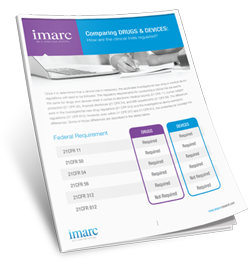
A Comparison: Drug and Medical Device Clinical Trials

Understanding the similarities and appreciating the differences of drug and medical device clinical trials is important for every trial participant—from the patients to the researchers. Whether the product being investigated is a drug or device, a well-organized, efficient clinical trial can save time and money for each individual and organization involved. Additionally, the faster and more accurately a trial is performed, the faster the new medication or clinical product can be introduced to the market and begins helping the community.

Topics: Drugs vs. Devices, Clinical Trials

Posted by John Lehmann on Wed, Jul 26, 2017

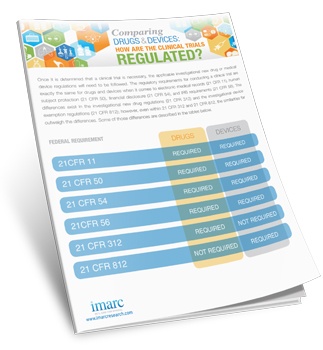
Comparing Drug and Device Trials

IMARC Research has published a whitepaper outlining the similarities and differences between drug and device clinical trials. Since IMARC focuses primarily in the medical device space, we felt it was important to highlight the differences between the two trials. It has proven to be one of our more popular whitepapers, so we have decided to offer an infographic as a quick reference.

Topics: Drugs vs. Devices, Clinical Trials

requestconsult-bg.jpg
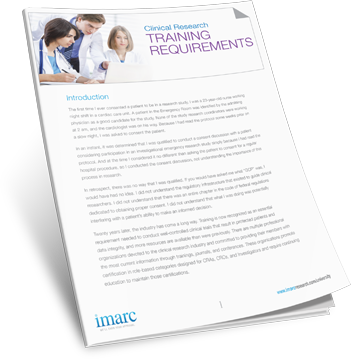
Clinical Research Training Requirements
Featured Resource

clinical research Training requirements

This whitepaper examines the similarities and differences between various US and international regulations and place them within the context of any number of roles found within the realm of clinical research.