


<img height="1" width="1" style="display:none" src="https://www.facebook.com/tr?id=213807269037206&ev=PageView&noscript=1">
Blog

Compliance In Focus

remote services

LEARN MORE ABOUT REMOTE SERVICES

Keep Your Clinical Trial Moving from a Distance

You want to keep your trial on track, but physical distancing and travel restrictions have made it difficult. Fortunately, IMARC has experience providing remote services.

FILTER BY:

Newest Post

Posted by Emily A. Matejka on Mon, Oct 07, 2019

Breaking Down the Revised Guidelines for HUDs and HDEs: First Steps?

In September of 2019 revisions of the Guidance for Industry and Food and Drug Administration (FDA) Staff: Humanitarian Use Device (HUD) Designations and the Guidance for Industry and FDA Staff: Humanitarian Device Exemption (HDE) Program were released. These guidelines were designed to assist the applicants in preparing their submissions of a HUD and HDE, in addition to the FDA reviewers in their evaluation and analysis. While new revisions of the guidelines were released, applicants should still be encouraged to follow the FDA regulations 21 CFR 814, Subpart H – Humanitarian Use Devices when submitting for HUD and/or HDE approval.

Topics: Humanitarian Device Exemption, HDE, Humanitarian Use Device, HUD
Posted by John Lehmann on Wed, Mar 04, 2015

FDA Updates HDE Guidelines

FDA is updating guidance on its humanitarian device exemption program to clarify an expanded profit allowance and a potentially less-restrictive upper-limit on the number of qualifying HDE devices that can be sold for profit in a given year.

Topics: Safety and Innovations Act of 2012, FDA, Humanitarian Device Exemption

Posted by John Lehmann on Wed, Mar 04, 2015

Obstacles for Bionic Medical Devices

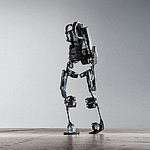
Chances are you may have seen an amputee or person with a disability with a sophisticated and complex medical device before.  What you probably didn’t stop to consider is where they got it and who created it?   Bionic medical devices are devices that have an electrical component which allows them to sense muscle contractions in the human body, then send electrical signals to nerves allowing a response.  Since bionic medical devices are devices by definition, they must also seek a pathway to FDA approval before they can be marketed in the U.S.  Given the small population of individuals, relatively speaking, who need these devices the most common pathway to approval is through a Humanitarian Device Exemption (HDE).  Like any pathway to marketing approval (510(k), Investigational Device Exemption, Investigational New Drug) there is a consider amount of research and development, and capital needed to achieve it.  Jamie Hartford, the managing editor of Medical Device and Diagnostic Industry (MD+DI) News Products and Suppliers recently published an online article outlining some of the common obstacles faced when working to achieve approval for these bionic medical devices.

Topics: MD+DI, Humanitarian Device Exemption, Bionic Medical Devices

Posted by John Lehmann on Fri, Jun 03, 2016

How Would You Make Humanitarian Device Applications Better?

FDA is currently seeking comments on the collection of information regarding the Humanitarian Device Exemption (HDE) applications and related requirements. As summarized by an article in MassDevice, the FDA is interested in learning:

Topics: Medical Devices, FDA, PMA, Humanitarian Device Exemption

Posted by John Lehmann on Wed, Mar 04, 2015

Cell Therapy Products… Falling into the HDE Category?

MedCity News released an article about Nanofiber Solutions development of scaffolds used for organ transplants. The company, a spinoff from The Ohio State University, boasts the first synthetic nanofiber transplant in the world, and hopes to grow in its market of artificial organ transplants.

Topics: technology solutions, cell therapy products, Humanitarian Device Exemption