

<img height="1" width="1" style="display:none" src="https://www.facebook.com/tr?id=213807269037206&ev=PageView&noscript=1">
IMARC Blog

Compliance In Focus

FILTER BY:

Newest Post

Posted by Lauren Luzar on Wed, Sep 26, 2018

Determining Risk for In Vitro Diagnostic Studies

In Vitro Diagnostic (IVD) devices used in clinical trials are classified according to the risk that is involved based on the potential outcomes and impact if the test does not perform properly. The risk class (Class I, II, or III) determines the review pathway for regulatory assessment. If the device is classified as Class I or II, and if it is non-exempt, a premarket notification (510(k)) will be required for marketing. A 510(k) is a premarket submission made to the FDA to demonstrate that the device is at least as safe and effective as a legally marketed device (21 CFR 807.92(a)(3)) that is not subject to a Premarket Approval (PMA).

Topics: Clinical Studies, In Vitro Diagnostics
Posted by Michael Marotta on Thu, Sep 28, 2017

IVD Basics

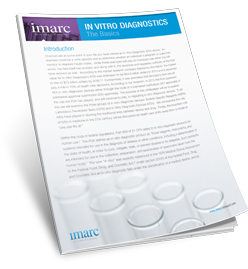
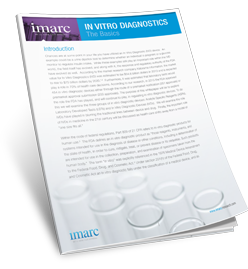
It has been estimated that In Vitro Diagnostics (IVD) will play a role in around 70% of health care decisions, and market estimates predict the IVD market will be close to 75 billion dollars in 2010. The role of IVDs in health care decisions should only continue to grow as healthcare shifts away from a “one-size-fits-all” model. Furthermore, developments in technology and the scope and precision of some of these devices have led to the evolution of the IVD field and with it, the role the FDA has played in regulating these devices.

Topics: FDA, In Vitro Diagnostics

Posted by John Lehmann on Thu, Mar 24, 2016

In Vitro Diagnostics: The Basics

It has been estimated that In Vitro Diagnostics (IVD) will play a role in around 70% of health care decisions, and market estimates predict the IVD market will be close to 75 billion dollars in 2010.  The role of IVDs in health care decisions should only continue to grow as healthcare shifts away from a “one-size-fits-all” model.  Furthermore, developments in technology and the scope and precision of some of these devices have led to the evolution of the IVD field and with it, the role the FDA has played in regulating these devices. 

Topics: IVD, FDA, IMARC Research Whitepaper, In Vitro Diagnostics

requestconsult-bg.jpg
Clinical Research Training Requirements
Featured Resource

clinical research Training requirements

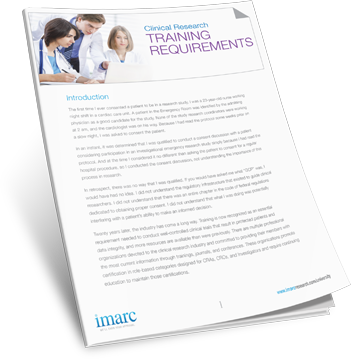
This whitepaper examines the similarities and differences between various US and international regulations and place them within the context of any number of roles found within the realm of clinical research.