

<img height="1" width="1" style="display:none" src="https://www.facebook.com/tr?id=213807269037206&ev=PageView&noscript=1">
Blog

Compliance In Focus

remote services

LEARN MORE ABOUT REMOTE SERVICES

Keep Your Clinical Trial Moving from a Distance

You want to keep your trial on track, but physical distancing and travel restrictions have made it difficult. Fortunately, IMARC has experience providing remote services.

FILTER BY:

Newest Post

Posted by Katelyn Weed on Wed, May 20, 2020

3D-Printed Medical Devices: The Process and the FDA’s Stance

3D printing, which is also known as additive manufacturing, involves a process in which two-dimensional layers of raw material are joined sequentially to build a rapidly constructed three-dimensional object.

The design and production of products using 3D printing have resulted in reduced material waste, conserved energy, and decreased time to bring products to the market. The capability of 3D printing can provide designers and manufacturers the flexibility of modifying a structural design without needing to alter machinery or tools in a manufacturing process. Such technological advancements have increased the use of 3D printing in the medical device industry.

Topics: Medical Devices, 3-D Printing

Posted by Ellisyn Scott on Tue, Feb 18, 2020

FDA’s Progressive Approval Pathway: Pros and Cons

The Food and Drug Administration (FDA) proposed a conditional progressive approval pathway for medical devices in April 2019. The proposal has met resistance by lawmakers and there are still unanswered questions.

Topics: Medical Devices, FDA Approval Pathway

Posted by John Lehmann on Fri, Jan 24, 2020

Four Medical Device Trends To Watch in 2020

To stay on the leading edge of innovation, today’s medical device manufacturers need to stay up to date on the latest trends and technologies.

Topics: Medical Devices

Posted by Sandra Maddock on Tue, Jan 29, 2019

6 Big Medical Device News Stories to Watch This Year


With new technology and groundbreaking medical device news making headlines every day, there has never been a more exciting time to be involved in clinical research. So much is changing so fast — faster than at any other time in the history of clinical research.

At IMARC Research, we take pride in innovation. We’re constantly monitoring medical device trends and regulatory updates to determine how they might apply to the clinical research teams who enlist our oversight.

Topics: Medical Devices

Posted by Cristina Calvin on Tue, Dec 05, 2017

FDA Releases Breakthrough Devices Program Draft Guidance

On December 13, 2016, the Breakthrough Devices provisions were added to the Food, Drug, and Cosmetic Act through section 3051 of the 21st Century Cures Act. This program is intended to help patients have more timely access to devices and breakthrough technologies that provide for more effective treatment or diagnosis for life-threatening or irreversibly debilitating diseases.

Topics: Medical Devices, Draft Guidance, FDA

Posted by Lisa Wickert on Fri, Oct 27, 2017

FDA Guidance: Use of Real-World Evidence to Support Regulatory Decision-Making for Medical Devices

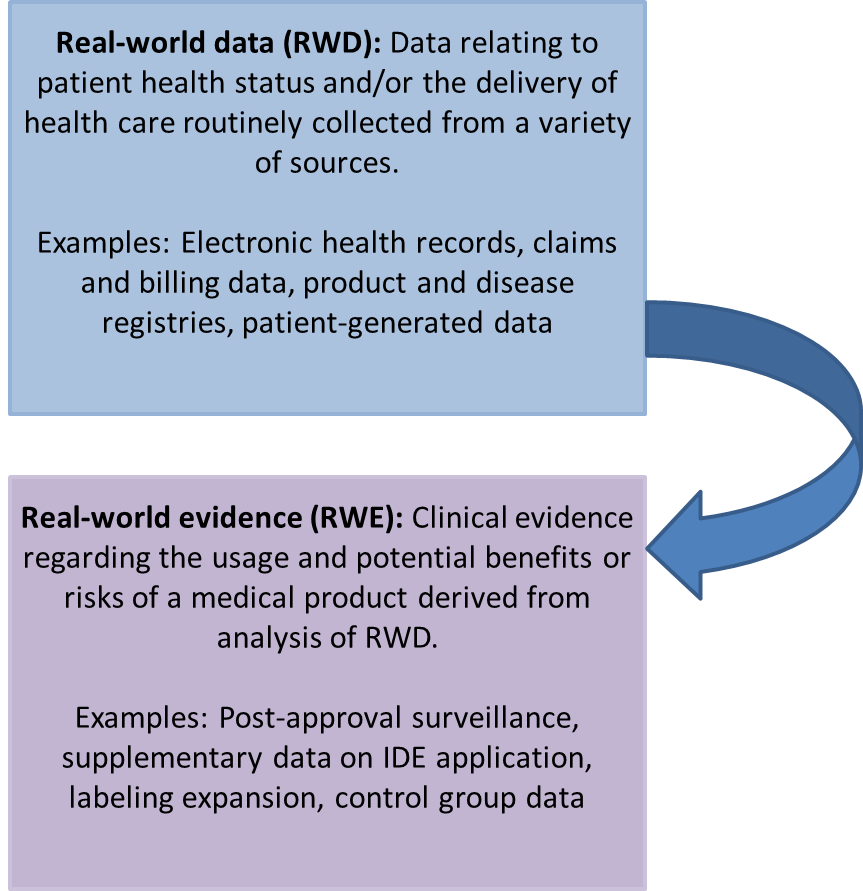
On August 31, 2017 The Food and Drug Administration (FDA) issued the finalized guidance manual for medical device companies’ use of real-world evidence (RWE) and real-world data (RWD) to gain FDA approval for their medical devices. The FDA draft guidance was originally issued on July 27, 2016 to the public to give those in the medical device industry an opportunity to provide comments prior to finalization. Additionally, the FDA hosted a webinar on the topic to provide additional guidance on October 10, 2017. Per the FDA, the guidance was issued “to clarify how we evaluate RWD to determine whether it may be sufficiently relevant and reliable to generate the types of RWE that can be used in FDA regulatory decision-making for medical devices.” This includes whether or not FDA will require an Investigational Device Exemption (IDE) to determine the safety and effectiveness of a device.

Topics: Medical Devices, New FDA Guidance, Real-World Evidence

Posted by John Lehmann on Thu, Jun 22, 2017

Device Monitoring is More Than SDV

Many believe good monitoring should heavily focus on Source Data Verification (SDV), which stripped down to its simplest meaning equates to “X=X” and “Y=Y”. And maybe some of you reading this are thinking “Isn’t that exactly what monitoring is?” While data integrity is absolutely essential, it is only the beginning of what comprehensive monitoring encompasses.

Topics: Medical Devices, Source Data Verification, Clinical Monitoring

Posted by John Lehmann on Wed, Oct 10, 2018

5 Keys to Choosing a Medical Device CRO [SLIDESHARE]


Having independent oversight is critical to ensuring compliance, keeping your clinical
research trial on track and bringing your device to market faster.

For this reason, many companies hire a clinical research organization (CRO) to monitor, audit and even manage their trial. Outsourcing this work has become more common and is widely accepted throughout the industry, but it can still be difficult to turn over any or all aspects of your trial to a third party. 

Medical device trials in particular bring complex compliance challenges, so having a CRO with specific expertise in this area can be tremendously beneficial.

How can you be sure you hire a medical device CRO that is committed to ensuring compliance and is as invested in your success as you are?

This slideshare covers the five factors you need to look for when choosing one.

Topics: Medical Devices, CRO, 5 Keys, Compliance Partners

Posted by John Lehmann on Thu, Oct 20, 2016

Comparing Drug and Medical Device Clinical Trials

Understanding the similarities and appreciating the differences of drug and medical device clinical trials is important. A well-organized, controlled clinical trial can save time and money. Additionally, the faster and more accurately a trial is performed, the faster the test article can be introduced to the market and begin helping the community.

Read on to learn the similarities and differences between drug and medical device clinical trials.

Topics: Medical Devices

Posted by John Lehmann on Mon, Nov 06, 2017

Drug and Medical Device Clinical Trials 101

Most medical professionals enjoy being on the forefront of new clinical treatments, techniques and products. Drug and device research trials are a great opportunity for those in the healthcare field to learn about and assist in the development of revolutionary ways to treat patients, before they’re introduced to the public. These studies can provide invaluable information and learning experiences to everyone involved.

The responsibility for running a clinical trial is immense, so learning as much as possible about the process is essential for clinical research professionals to effectively contribute. Read on to discover the who, what, why and how of drug and device clinical trials.

Topics: Medical Devices

Posted by John Lehmann on Tue, Oct 18, 2016

A Handy Guide to Medical Device Classifications

A clinical trial is required for all new drugs, but this is not the case for all medical devices. Medical devices start by undergoing a risk assessment in order to determine the severity of potential harm to the user and the probability of that harm occurring. Each device is assigned to one of three classes based on this assessment, and this classification dictates whether or not a clinical trial is necessary.

Topics: Medical Devices

Posted by John Lehmann on Wed, Jan 03, 2018

Clinical Training: A Blueprint for Success

Having a well-trained clinical research staff is vital to ensuring compliance and securing regulatory approval.  Providing training solutions for continuous improvement, understanding industry best practices and new clinical developments – is vitally important to employees.  Yet many medical device companies face challenges on how best to provide high-quality training programs for their clinical departments. 

Topics: Medical Devices, Clinical Training, Clinical Research Staff

Posted by Brandy Chittester on Fri, Jun 03, 2016

10 Attributes of a Great Monitor

Monitoring clinical trials at a high level requires a unique set of traits, skills, and abilities. While monitors often have diverse backgrounds and experiences, there are specific attributes that characterize great monitors and separate them from the rest of the pack. The following list identifies those attributes and explains why each is instrumental to clinical monitoring. This list is not ranked in any particular order and is not meant to be all inclusive; please share your thoughts!

Topics: Medical Devices, Clinical Research, Clinical Monitoring, 10 Attributes

Posted by Lauren Luzar on Tue, Sep 29, 2015

Leveraging Adult Clinical Data for Pediatric Medical Devices

On May 6th, 2015 the FDA released a draft guidance on Leveraging Existing Clinical Data for Extrapolation of Pediatric Uses of Medical Devices.  This guidance expands on the information provided in the final Premarket Assessment of Pediatric Medical Devices guidance originally published in 2004 and updated in 2014. The FDA believes that leveraging relevant clinical data may lead to more devices being approved for pediatrics.  The guidance defines pediatric patients as 21 years or younger at the time of diagnosis or treatment.

Topics: Medical Devices, Clinical Data, FDA

Posted by Ashton Steinhagen on Fri, Jun 03, 2016

Do The Benefits Outweigh The Risk?

I was reading an article on the FDA’s website over concerns related to devices causing serious adverse events, the determination that the benefits outweigh the risks was the conclusion.  This raises some interesting questions with regards to patient safety.  The article specifically talks about devices that are used primarily as a bridge to transplant (BTT) or destination therapy in relation to severe heart failure.  Having been trained on the particular devices in question and taking care of the patient population whom received the devices, these patients have very few if any options.  Determining whether or not a device is safe is one thing but distinguishing if a device that has been shown to cause serious adverse events is acceptable in a certain patient population is another.

Topics: Medical Devices, FDA, Risk, Title 21 Part 812.30

Posted by John Lehmann on Tue, May 26, 2015

Your Blog Will Voluntary Audits Help the FDA?

In the clinical research industry approvals for investigational products are not granted- they are earned. With FDA and International inspections on the rise, so are stress levels of everyone involved in clinical studies. Auditing can be looked at as a quality improvement process, and a way to prepare for inspections and approval by:

Topics: Medical Devices, FDA, Auditing

Posted by John Lehmann on Mon, Jul 09, 2018

Draft Guidance for Advisory Panels Released

On April 1st, the FDA issued a draft guidance that provides more comprehensive information for industry and CDRH on the processes associated with panel device meetings.  The new draft guidance document, Procedures for Meetings of the Medical Devices Advisory Committee, pertains to the to 17 of the 18 Medical Devices Advisory Committee (MDAC) panels overseen by FDA's Center for Devices and Radiological Health (CDRH), the FDA center in charge of regulating medical devices.

Once finalized, the updated guidelines will replace a 2000 CDRH guidance document on the panel process and a 1991 blue book memo.  Thus, the guideline clarifies the circumstances in which the CDRH consults with a device advisory panel, the conduct of panel meetings and the expected timelines to prepare for a panel meeting.

Topics: Medical Devices, Draft Guidance, FDA, CDRH

Posted by John Lehmann on Fri, Jun 03, 2016

Clinical Research Training Requirements

IMARC Research’s new whitepaper examines the similarities and differences between the current US regulations and places them within the context of any number of roles found within the realm of clinical research. While there are no direct references within the regulations as to what types and to what degree training is required, a well-developed training curriculum is a prerequisite for quality research.

Topics: Medical Devices, GCP/Regulatory Training, IMARC Research Whitepaper

Posted by John Lehmann on Thu, Apr 16, 2015

How to Tackle Complicated Clinical Trials

Recent widespread recalls of investigational products have led to harsher scrutiny and stricter rules from the Food and Drug Administration (FDA). Steps take to prepare for trials in the past are no longer enough. The path to FDA approval requires tremendous organizational skills and attention to detail to navigate; but with the right preparation and commitment to compliance, all of these challenges can be overcome.

Topics: Medical Devices, Complicated Clinical Trials, Medical Device CRO, FDA

Posted by Emily Haglund on Fri, Apr 17, 2015

Final FDA Guidance: Medical Device Data Systems, Medical Image Storage Devices, and Medical Image Communications Devices

Recently, the FDA issued a final guidance document regarding medical device data systems, medical image storage devices, and medical image communications devices. The FDA also held a webinar in February 2015 to support this guidance document.

Topics: Medical Devices, FDA Guidance, Medical Image Storage Devices, Medical Image Communications Devices

Posted by Emily Haglund on Wed, Mar 04, 2015

Update on Strategic Priorities for CDRH

The Center for Devices and Radiological Health (CDRH) recently released an update on its 2014-2015 Strategic Priorities. This document summarizes the areas that CDRH is focusing on to ensure patients in the US have access to high-quality, safe, and effective medical devices. The current strategic priorities are: to strengthen the clinical trial enterprise, to strike the right balance between premarket and postmarket data collection, and to provide excellent customer service.

Topics: Medical Devices, Strategic Priorities, CDRH

Posted by John Lehmann on Wed, Mar 04, 2015

Significant Risk vs. Non-Significant Risk – What’s the Difference?

What is the difference between Significant Risk studies (SR) and Non-significant Risk studies (NSR)?

Topics: Medical Devices, Significant Risk, Non-Significant Risk, FDA

Posted by Paul Cobb on Tue, Mar 14, 2017

Cybersecurity in Medical Devices: New FDA Guidance


On October 2, 2014 the FDA issued a guidance that reflects current thinking on management of
 cybersecurity in medical devices
. Device manufacturers are encouraged to consider potential threats of hackers and security breaches in the research, design, and development of medical devices. The FDA further recommends incorporating device protection plans into premarket submissions. This has the potential to increase costs in all phases of production.

Topics: Medical Devices, FDA Guidance, Cybersecurity

Posted by John Lehmann on Wed, Mar 04, 2015

3 Costly Traps on the Road to Device Innovation

No matter the therapeutic area, device companies agree: Creating cutting-edge products is expensive. From the R&D costs to the pricy FDA fees, the expense for innovation adds up quickly. As products become more technologically advanced, the cost for designing new devices has increased. At the same time, device companies are being hit with fees that are wiping out their R&D budgets, such as the 2.3% medical device tax, which reportedly requires companies to collectively pay an estimated $194 million per month.

Topics: Medical Devices, Innovation, FDA Fees, MD+DI

Posted by John Lehmann on Wed, Mar 04, 2015

Will Outcomes Research Make or Break Device Companies?

Outcomes research can be defined as “the study of the end results of health services that takes patients' experiences, preferences, and values into account—is intended to provide scientific evidence relating to decisions made by all who participate in health care.” Recently, the push has been for greater emphasis on outcomes and a new joint effort is a giant boost in this direction.

Topics: Medical Devices, Outcomes Research, SharedClarity, MD+DI

Posted by Stephani Hulec on Wed, Mar 04, 2015

Regulations in a Flat World

The World Health Assembly is the decision-making body of the World Health Organization (WHO). This assembly draws leading government health officials from the 194 WHO member nations and was first convened in 1948 shortly after the WHO was created. On 24 May 2014, the 67th annual World Health Assembly closed.  This close marked the end to a five day meeting that featured a record-breaking number of agenda items, documents and resolutions, and almost 3,500 registered delegates. During the assembly more than 20 resolutions on important global public health issues were adopted.  These adoptions ranged from issues relating from antimicrobial drug resistance and access to essential medicines to addressing the global challenge of violence and the public impact of exposure to mercury and mercury compounds. Of note, is the passage of a resolution to strengthen regulatory systems.

Topics: Medical Devices, World Health Organization, World Health Assembly, Regulations

Posted by John Lehmann on Fri, Jun 03, 2016

China-Made Device Knock Offs a Source of Concern

Medtech companies in the U.S. are concerned about Chinese device manufacturers stealing their intellectual property and making knock-offs that replicate American devices.  However, these devices are not as safe according to Advamed.

Topics: Medical Devices, AdvaMed, China-Made, Kock Offs, Ralph Ives

Posted by John Lehmann on Tue, Oct 24, 2017

What Exactly Are Device-Drug Combination Products?

The area of combination products is an exciting expanse of potential innovation and discovery for both the medical device and drug industries. But what exactly are combination products? According to 21 CFR 3.2(e), they are defined as:

Topics: Medical Devices, 21 CFR 3.2(e), Drug, Combination Products, FDA

Posted by John Lehmann on Mon, Nov 06, 2017

What Makes a Device Class III?

According to an article in “The Gray Sheet” the FDA is proposing new regulatory language to determine what devices designated Class III devices and not suitable for down-classification.

Topics: Medical Devices, Class III, FDA Safety and Innovations Act

Posted by Brandy Chittester on Fri, Jun 03, 2016

Do Device Post-Market Studies Follow 812?

It just depends!

Topics: Medical Devices, Post-Market Studies, 21 CFR 812.140(d), FDA

Posted by Jaime Wynbrandt on Wed, Mar 04, 2015

Compassionate Use in Unapproved Medical Devices

When and how is compassionate use of unapproved medical devices allowed? The Federal Regulations explicitly state how an unapproved device should be used in a compassionate use situation by a physician. The FDA website also provides a training presentation on this topic.

Topics: Medical Devices, Compassionate Use, FDA

Posted by John Lehmann on Fri, Jun 03, 2016

FDA Monitors Feedback on 510(k) Guidance Revisions

Topics: Medical Devices, Congress, FDA, 510(k)

Posted by John Lehmann on Fri, Jun 03, 2016

Product Accountability in Clinical Trials

In order for a new medical product to reach patients it must first be proven safe and effective and then be approved for use by the governing regulatory body. Clinical trials are the vehicle to bring these innovative technologies to patients and evaluate them in support of regulatory approval. Unless a product is approved under the appropriate regulations for a specific use, it cannot be commercialized for that indication. In clinical research the products are still investigational, and even in a hospital setting, these products are treated differently.

Topics: Medical Devices, Product Accoutability, Clinical Research

Posted by John Lehmann on Wed, Mar 04, 2015

What Exactly Are Device-Drug Combination Products?

The area of combination products is an exciting expanse of potential innovation and discovery for both the medical device and drug industries. But what exactly are combination products? According to 21 CFR 3.2(e), they are defined as:

Topics: Medical Devices, Combination Products, FDA

Posted by John Lehmann on Wed, Mar 04, 2015

FDA Addresses Shortage of Child-Friendly Devices

Topics: Medical Devices, Child-Friendly Devices, Pediatric Market, FDA

Posted by John Lehmann on Wed, Mar 04, 2015

FDA Issues Final Guidance on Wireless Technology

The FDA has released its final guidance that outlines an approach to regulating the fast growing and ever evolving category of medical devices that employ radiofrequency wireless technology (RF).  The guidance, which was issued on August 13, 2013, comes more than six years after the original draft guidance was issued in January 2007.

Topics: Medical Devices, Wireless Technology, Final Guidance, FDA

Posted by Sandra Maddock on Wed, Mar 04, 2015

The Top 5 Complications of FDA Medical Device Trials

Topics: Medical Devices, Complicated Clinical Trials, FDA, IMARC Research Whitepaper

Posted by John Lehmann on Wed, Mar 04, 2015

Presidential Medical Devices

On Tuesday, August 6th, the nation’s 43rd president, George W. Bush, underwent a heart procedure during which a stent was inserted to treat a blockage discovered during an annual physical in Dallas, Texas. According to an article published by NPR, the former president is doing well after the surgery performed at Texas Health Presbyterian Hospital and will be released from the hospital on Wednesday.

Topics: Medical Devices, Presidential, George W. Bush

Posted by John Lehmann on Wed, Mar 04, 2015

“HoW” the FDA is Looking at Women and Medical Devices

Topics: Medical Devices, Women, "HoW", Cardiovascular Disease

Posted by Jacqui Lingler on Wed, Mar 04, 2015

Cyber Attacks and Medical Devices - A Real Threat?

Americans are well aware of the ever growing potential of a cyber attack on our credit cards, bank and email accounts, even our social media outlets. But cyber attacks on medical devices? Is this a real threat?

Topics: Medical Devices, Cyber Attacks, The Department of Veterans Affairs, FDA

Posted by John Lehmann on Fri, Jun 03, 2016

The Importance of Product Accountability in Clinical Trials

In order for a new medical product to reach patients it must first be proven safe and effective and then be approved for use by the governing regulatory body. Clinical trials are the vehicle to bring these innovative technologies to patients and evaluate them in support of regulatory approval. Unless a product is approved under the appropriate regulations for a specific use, it cannot be commercialized for that indication. In clinical research the products are still investigational, and even in a hospital setting, these products are treated differently.

Topics: Medical Devices, Federal Regulations, Product Accountability, Clinical Research

Posted by Jacqui Lingler on Fri, Jun 03, 2016

Five Reasons to include a CRO in Study Start-Up

Recently, a team of IMARC monitors traveled to a sponsor’s clinical research headquarters to meet face-to-face, study team to study team, to kick off a new medical device study. The two teams joined together with a heavy agenda to get the study’s ducks in a row prior to our monitors hitting the road for the on-site initiation visits scheduled in the upcoming weeks. While this is not always the case at study start-up, with tight timelines and limited budgets, there are many advantages to getting the teams together at the beginning of the study to help prepare for a successful study. Additionally, the teams can process through potential study challenges before they become potentially larger issues. Read on to learn five reasons why the sponsor should meet with and include the CRO in study start up!

Topics: Medical Devices, Study Start-up, Clinical Monitoring

Posted by John Lehmann on Fri, Jun 03, 2016

Product Accountability in Clinical Trials - Why is it Important?

In order for a new medical product to reach patients it must first be proven safe and effective and then be approved for use by the governing regulatory body. Clinical trials are the vehicle to bring these innovative technologies to patients and evaluate them in support of regulatory approval. Unless a product is approved under the appropriate regulations for a specific use, it cannot be commercialized for that indication. In clinical research the products are still investigational, and even in a hospital setting, these products are treated differently.

Topics: Medical Devices, Product Accountability, IMARC Research, Clinical Research

Posted by John Lehmann on Fri, Jun 03, 2016

510(k) Device Modifications - FDA Summer Workshop

On April 30, 2013, FDA announced a workshop titled “510(k) Device Modifications: Deciding When to Submit a 510(k) for a Change to an Existing Device” scheduled for June 13, 2013. The main purpose of the meeting is to discuss the agency’s past, present, and future policy on 510(k) modifications. The FDA is inviting external stakeholders to provide discussion and bring examples of actual device modifications to use in developing future policy.

Topics: Medical Devices, FDA, 510(k)

Posted by John Lehmann on Wed, Mar 04, 2015

China’s Proposed Regulations on Medical Devices - What Should American Device Companies Know?

March proved to be a busy month for China and the government bodies responsible for regulating food and drug safety.

Topics: Medical Devices, China, Regulatory

Posted by Jacqui Lingler on Fri, Jun 03, 2016

NEW! Medical Device Online Marketplace - Look out eBay!

Recently launched,  aptitude's online marketplace main goal is to connect medical device suppliers with device purchasers.  In an article posted on MassDevice.com, aptitude’s Vice President and General Manager described it as being, “like eBay, which provides a marketplace where buyers and sellers can come together."

Topics: Medical Devices, Online Marketplace, appitude LLC

Posted by Jacqui Lingler on Wed, Mar 04, 2015

Protocol Development - Is this Medical Test Really Necessary?

Regardless if you are reading this from a sponsor, site, monitor or IRB perspective, we have all worked on a protocol with a medical test that really seems unnecessary or obsolete, not to mention, difficult to obtain with in the time window specified by the protocol.

Topics: Medical Devices, Protocol Development, Medical Tests

Posted by Brandy Chittester on Wed, Mar 04, 2015

FDA Launches New Program for Women and Medical Devices

It is critical that the group of patients enrolled in a study represent the population that may receive the device once it is on the market. Certain medical devices could elicit different responses depending on gender, according to the federal watchdog agency. Basic differences such as genetics, hormones, body size, diet and socio-cultural issues may play a role in the efficacy of medical devices in patients, according to FDA.

Topics: Medical Devices, Health of Women Program, FDA, CDRH

Posted by Jacqui Lingler on Wed, Mar 04, 2015

Home Use Tests - Are they Medical Devices?

Concerned about your cholesterol? Trying to track your ovulation and hoping to get pregnant? Want to drug test your teenager? There are at home use tests for these questions and more. For around $20.00 dollars you can avoid long doctor’s office waits, submitting claims to the insurance company and discussing potentially embarrassing topics with your primary care physician. But, are these home use tests consider medical devices and therefore subject to the same rigor of clinical trials to confirm accuracy and safety?

Topics: Medical Devices, Home Use Tests, FDA

Posted by John Lehmann on Wed, Mar 04, 2015

Celebrities Going Under the Knife - For Medical Devices!

Celebrities are constantly making headlines for surgeries-usually those involving popular plastics or silicone.  A shorter list is of those celebrities that went under the knife for other medical treatments-specifically-medical devices or replacements.

Topics: Medical Devices, FD&C Act, Celebrities, Section 201

Posted by John Lehmann on Wed, Mar 04, 2015

How Can the Weather Impact Medical Devices?

Topics: Medical Devices, M.D., Margaret Hamburg, Weather, FDA

Posted by John Lehmann on Wed, Mar 04, 2015

The Safest Way to Test Medical Devices?

Without the willing volunteers to give their consent and participate in clinical research trials many innovative medical devices and life-saving pharmaceutical drugs would never reach patients. FDA and other regulatory bodies exist to protect the rights, welfare, and safety of those subjects choosing to contribute to a study. However, is there an even better way to bring these products to market that would require zero percent risk to human subjects?

Topics: Medical Devices, Testing, Virtual Patients, FDA

Posted by Sandra Maddock on Wed, Mar 04, 2015

Is Device Monitoring More Than SDV?

Many believe good monitoring should heavily focus on Source Data Verification (SDV), which stripped down to its simplest meaning equates to “X=X” and “Y=Y”.  And maybe some of you reading this are thinking “Isn’t that exactly what monitoring is?”  While data integrity is absolutely essential, it is only the beginning of what comprehensive monitoring encompasses.

Topics: Medical Devices, Source Data Verification, Clinical Monitoring

Posted by John Lehmann on Wed, Mar 04, 2015

Should Certain Devices be Held to a Higher Standard?

Many researchers are proposing a reclassification of all hip joint metal-on-metal hips as there may exist a regulatory loop-hole allowing dangerous devices to reach patients. FDA proposed a new rule that would require these devices to submit a Premarket Approval Application (PMA) which were being accepted through the 510(k) process.

Topics: Medical Devices, Premarket Approval Application, FDA, 510(k)

Posted by John Lehmann on Fri, Jun 03, 2016

How Would You Make Humanitarian Device Applications Better?

FDA is currently seeking comments on the collection of information regarding the Humanitarian Device Exemption (HDE) applications and related requirements. As summarized by an article in MassDevice, the FDA is interested in learning:

Topics: Medical Devices, FDA, PMA, Humanitarian Device Exemption

Posted by Brandy Chittester on Mon, Jul 09, 2018

Case Study: Medical Device FDA Inspection

With the trials IMARC Research has monitored, our experience has been that the FDA has begun inspecting clinical sites after the Sponsor submits their Premarket Approval Application (PMA), the application submitted to the FDA for approval of a Class III device. However, on one of the projects we were working on FDA contacted one of the sites for a routine inspection months before the PMA was to be submitted.

Topics: Medical Devices, Premarket Approval Application, FDA Inspection

Posted by John Lehmann on Wed, Mar 04, 2015

FDA’s To-Do List 2013 - PART II

As a follow-up to yesterday’s blog, here is a list of guidance documents FDA plans to fully publish, and intends to publish in the upcoming fiscal year. Remember, these lists and increased transparency efforts are in part the result of FDA negotiations with industry for the Agency to meet different quantitative and qualitative goals for the medical device industry. This is done in hopes to allow safe and effective devices to the public in a faster, more efficient method.

Topics: Medical Devices, 2013 To-Do List, Guidance Documents, FDA

Posted by John Lehmann on Wed, Jan 03, 2018

New Industry Trend? Warn Wall Street Before Receiving FDA Warning Letter

It hit the headlines in a dizzy twist on words. The CEO of St. Jude put the cart before the horse in warning investors that he was expecting a warning letter from FDA before one was actually even issued! According to a report on MedCity News, this type of announcement apparently has no precedent. Have you ever heard of a company proactively telling Wall Street they’re going to receive the dreaded warning letter before receiving it- or even a FDA form 483? This was something that was on the mind of analyst Bob Hopkins of Bank of America.

Topics: Wall Street, Form 483, Medical Devices, FDA

Posted by John Lehmann on Mon, Nov 06, 2017

Do Medical Devices Need an FDA Security Plan?

One great aspect of the research industry is being on the cutting-edge of new, innovative technologies. Looking back at the history of medical devices, it’s amazing how far technology has brought us. New devices are incorporating more complex technologies than ever before. These medical advances are to help treat patients; however, does the increase in innovation also mean an increase in safety risks?

Topics: Medical Devices, FDA Security Plan, US Government Accountability Office

Posted by John Lehmann on Fri, Jun 03, 2016

Is FDA Breaking Down the Brick Wall for Devices?

 “One reason I think it’s going to change is we’re starting to see change already.” This statement was made by FDA Head, Dr. Margaret Hamburg, after meeting with senators and med-tech leaders about industry concerns. According to an article by the Star Tribune, the overall tone after the meeting was optimistic and hopes that the FDA Safety and Innovation Act signed into law will help loosen the logjam for approving medical devices.

Topics: Medical Devices, FDA Safety and Innovation Act, Margaret Hamburg, FDA, 510(k)

Posted by John Lehmann on Wed, Mar 04, 2015

Friday Fun: Nick-names for Medical Devices

A recent DeviceTalk blog on MD+DI caught my attention. The article’s title, “What’s in a Medical Device’s Name? For Patients, a Lot” speaks to the fact that for some patients a lifetime is spent with their medical device. This is especially true for those with chronic conditions, like Type I diabetes.

Topics: Medical Devices, medical device patients, MD+DI

Posted by John Lehmann on Wed, Mar 04, 2015

Does the US Win Gold in Medical Devices?

It’s the age old debate… Is the US regulatory system or the EU regulatory system better for the medical device industry? Recently in PLoS Medicine Journal the results of a systematic review was published that evaluated the two systems.

Topics: Medical Devices, Gold Medal, US Regulatory System, EU Regulatory System

Posted by John Lehmann on Fri, Jun 03, 2016

New FDA Rule: Unique Device Identification

One of the biggest concerns for any device on the market is the possible risk to patients and adverse events tied to the product. In order to improve the quality of information tied to specific medical devices distributed in the US, FDA released a proposed rule for devices to carry a Unique Device Identifier (UDI).  According to the press-release the code is a unique numeric of alphanumeric sequence specific to a device model and also can be tied back to a lot or batch number and expiration date. The FDA provided an example of what a UDI would look like on a medical device label.

Topics: Medical Devices, Unique Device Identification, FDA

Posted by John Lehmann on Fri, Jun 03, 2016

Do Devices Need More Risk Analysis?

Risk analysis is essential in regards to investigational devices. The goal of risk assessment is to remove a hazard or reduce the level of its risk by adding precautions or control measures, as necessary. It’s an important process which can identify problems with investigational products and help eliminate costs, time, and risk associated with recalling the product- but most importantly, protect patients.

Topics: Medical Devices, Risk Analysis, Sentinel Assurance of Effective Devices of 2012

Posted by John Lehmann on Fri, Jun 03, 2016

What is a Device You Use at Least Twice a Day?

You might be surprised to find that the good ole toothbrush is a long time trusted medical device. The FDA Medical definition of a manual toothbrush is “a device composed of a shaft with either natural or synthetic bristles at one end intended to remove adherent plaque and food debris from the teeth to reduce tooth decay.”  This seems to be pretty simple and straight forward! However, recently the International Organization for Standardization (ISO) released new standards for this manual device. The new requirements and test methods include:

Topics: Medical Devices, International Organization for Standardization, FDA

Posted by John Lehmann on Fri, Jun 03, 2016

Six Mistakes to Avoid When Launching Medical Devices in Europe

Many medical device companies have decided to launch their investigational products initially in Europe.  Representing one-third of the global medical device market, the European Union market provides a significant opportunity for medical device start-up companies.  However, according to an article in MedCity News, it can create many challenges that require proper preparation.
Topics: Medical Devices, Greg Davis, MedCelerate

Posted by John Lehmann on Fri, Jun 03, 2016

Will a More Rigorous FDA Equate to Longer 510(k) Clearance?

We ran across this interesting article in MD+DI.  According to a report released by the Emergo Group, the average time it takes to obtain 510(k) clearance has risen steadily in recent years.  The findings in the report indicated that the average number of days from submission to clearance increased every year from 2006 to 2010.

Topics: Medical Devices, Emergo Group, FDA, 510(k)

Posted by John Lehmann on Fri, Jun 03, 2016

What is the Value of Social Media for Medical Device Companies?

It seems as though these days, everyone has a Facebook page, Twitter account, etc. In fact, even public groups and companies are using social media in similar ways and in abundance.

Topics: Medical Devices, social media

Posted by John Lehmann on Fri, Jun 03, 2016

Will 2.3% Sales Tax Push Med-tech Companies Overseas?

There has been much talk recently about the proposed changes to the regulatory and healthcare systems in the U.S. for the medical device industry. A recent MD+DI article by Nick Woods, director of Woods Medical Media, describes these proposed changes and how they might impact our industry. Woods points out that while President Obama’s PPACA document contains 2074 pages filled with words, for most, one number holds the most weight. The 2.3% sales tax on medical devices expected to come into effect a year from now. The industry seems to be united against this new tax. Our blog last October highlighted Senator Scott Brown’s plight for a repeal, and there have been numerous other calls to have it eliminated.

Topics: Medical Devices, technology solutions, nick woods, MD+DI

Posted by John Lehmann on Mon, Nov 06, 2017

What’s on the FDA's "To Do" List for Devices in 2012?

The FDA released its four main priorities for 2012, and the focus of the FDA will be:

Topics: Medical Devices, john lehmann, FDA

Posted by John Lehmann on Fri, Jun 03, 2016

Should Smaller Med-tech Companies Avoid Emerging Markets?

In an article featured on MassDevice, a group of large-cap Med-tech CEOs in a panel discussion at the recent OneMed conference in San Francisco indicated that emerging markets are too complex for smaller firms to navigate. Given the slowing growth of the U.S and European markets, emerging markets are very tempting. However, entry into these markets can be very challenging.

Topics: Medical Devices, Compliance

Posted by John Lehmann on Fri, Jun 03, 2016

Confusion with ‘Chemical Action’

The medical device industry seems to be a limitless pathway of innovation, creativity, and advancements. However, navigating this pathway can be a challenge, and as increasingly complex and combination products enter the arena, more guidance is required to steer the way.

Topics: Medical Devices, john lehmann, FDA

Posted by John Lehmann on Fri, Jun 03, 2016

FDA Misses MDUFMA Deadline

MassDevice reports that the FDA missed its second deadline to submit a proposal to Congress for the Medical Device User Fee & Modernization Act (MDUFMA), which is set to be renewed this year. The device industry and the federal watchdog agency have been in discussion over the fees mandated by the Medical Device User Fee & Modernization Act.

Topics: Medical Devices, john lehmann, FDA

Posted by John Lehmann on Fri, Jun 03, 2016

Continuity in Medical Device Reviews

An article in Healing Innovations caught our eye. It reports that the FDA recently released a standard operating procedure (SOP) called “SOP: Management of Review Staff Changes During the Review of a Premarket Submission.”

Topics: Medical Devices, john lehmann, FDA

Posted by John Lehmann on Fri, Jun 03, 2016

Gender Guidance

Recently the FDA issued a draft guidance on the study and evaluation of gender differences in medical device clinical studies. The guidance is issued with hopes to increase the number of female subjects enrolled in clinical trials.

Topics: Medical Devices, john lehmann, Clinical Research

Posted by John Lehmann on Fri, Jun 03, 2016

FDA Issues Two Draft Guidance Documents

On November 10th, a FDA press release announced they issued a draft guidance aimed at fostering early-stage devices within the U.S.  The guidance contains new approaches toward early feasibility studies, which are conducted in a small number of patients early in device development, while providing appropriate human subject protection.  The FDA is seeking a small number of companies that could pilot the new approach, as the results of the pilot will help inform the final guidance.

Topics: Medical Devices, john lehmann, FDA, Clinical Research

Posted by John Lehmann on Fri, Jun 03, 2016

Patent Reform Could Help Medical Device Startup Companies

The Leahy-Smith America Invents Patent Reform Act that went into effect in late September could help some medical device companies. According to an article in MedCity News, the legislation recently passed by Congress represents the biggest changes to patent law in the United States since 1952.

Topics: Medical Devices, john lehmann