In 1996 The University of Rochester was offering $150 to volunteers for what was designed to be a minimal-risk research study. To 19-year-old Nicole (
Topics: New York Times, Clinical Research, Nicole Wan



You want to keep your trial on track, but physical distancing and travel restrictions have made it difficult. Fortunately, IMARC has experience providing remote services.

In 1996 The University of Rochester was offering $150 to volunteers for what was designed to be a minimal-risk research study. To 19-year-old Nicole (
Topics: New York Times, Clinical Research, Nicole Wan

Regardless if you are reading this from a sponsor, site, monitor or IRB perspective, we have all worked on a protocol with a medical test that really seems unnecessary or obsolete, not to mention, difficult to obtain with in the time window specified by the protocol.
Topics: Medical Test, New York Times, Protocol Development
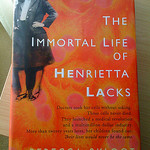
There is a new development in the story of Henrietta Lacks, the woman whose cancerous cells were obtained without her consent and developed into the immortal HeLa cell line. You may recall that Henrietta presented to John Hopkins in Baltimore Maryland in 1951 and was treated for cervical cancer. During her treatment, her doctors obtained a sample of healthy cervical cells along with a sample of the cancerous ones for testing. Unexpectedly, Dr. George Otto Gey was able to keep the cells alive in a culture and they have been used without Henrietta’s permission in numerous research studies ever since. In fact, you can still obtain a sample of HeLa cells today. Unfortunately, Henrietta was never even informed of this and it wasn’t discovered until over 20 years later when Johns Hopkins contacted her children to see if they would be willing to give blood samples in order to better understand the immortal cells. Not only has the Lacks family had no say in how Henrietta’s cells could be used, but they themselves have struggled to receive adequate medical care because the family has never been compensated in any way for their mother’s contribution to science.
Topics: NIH, Henrietta Lacks, New York Times, Clinical Research

The New York Times published an article that poses an important question to researchers- Do new medical procedures, products, and drugs work better than the old practices that they commonly replace? It is a similar question that consumers are faced with every time a new version of their favorite cell phone is released- it is new, but is it necessarily better?
Topics: New England Journal of Medicine, New York Times, Clinical Research
Most people are familiar with the term placebo effect, in which patients experience beneficial symptoms associated with a specific treatment, even when they are given an ineffectual treatment, or “placebo”. Recently, this New York Times article discussed the opposite medical phenomena known as the nocebo effect. The nocebo effect is defined as:
Topics: Clinical Studies, The Nocebo Effect, New York Times, New Symptom