


<img height="1" width="1" style="display:none" src="https://www.facebook.com/tr?id=213807269037206&ev=PageView&noscript=1">
Blog

Compliance In Focus

remote services

LEARN MORE ABOUT REMOTE SERVICES

Keep Your Clinical Trial Moving from a Distance

You want to keep your trial on track, but physical distancing and travel restrictions have made it difficult. Fortunately, IMARC has experience providing remote services.

FILTER BY:

Newest Post

Posted by Natalie Jarmusik on Tue, May 14, 2019

World’s First Malaria Vaccine Brings Hope and Caution to the Realm of Clinical Research

On Tuesday, April 23, 2019, the World Health Organization (WHO) announced the launch of a vaccine pilot for malaria in the country of Malawi. Malawi is the first of three African countries, including Ghana and Kenya, which will introduce the vaccine known as RTS,S to children of up to two years of age. Each year, malaria kills 435,000 people worldwide, the majority of them being African children. Additionally, according to the WHO’s press release for the vaccine, the disease claims the life of one child every two minutes.

Topics: World Health Organization, Clinical Reseasrch, Malaria Vaccine
Posted by Scott Schisler on Mon, Nov 06, 2017

Did You Know WHO Published GCP Before ICH?


You may be familiar with IMARC Research’s History of Clinical Research (HCR). We recently released an eBook about it that briefly describes all of the images that currently make up the timeline. If you have visited our office, you may have also been given a guided tour of one of our most renowned resources. Due to the overwhelmingly positive feedback we have received, we will be highlighting each time point with a series of blogs that we plan to release over the course of the past couple calendar years.

Back in the early 1960’s, public perception of clinical research began to take a turn as talks and frightful images of the Thalidomide tragedy gained national news. In this case, Congress managed to pass new legislation to attempt to mitigate the issue (the Kefauver-Harris Amendment, respectively), but who couldn’t be left wondering “What’s the next terrible course of events that will happen?”

Topics: Good Clinical Practice, World Health Organization, History of Clinical Research, IMARC Research, International Conference on Harmonization

Posted by Michael Marotta on Wed, Mar 04, 2015

Compassionate Use and the Animal Rule

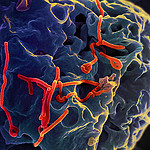
In March of 2014, we wrote about Compassionate use in Unapproved Medical Devices. To briefly summarize, compassionate use refers to the use of an unapproved device or drug in a single patient or small group where the condition of the patient/group is serious and there is no alternative treatment. The FDA can use regulatory discretion to determine if an investigational drug/device can be used and FDA approval is required prior to use.  This clause has come under the spotlight recently with the treatment of two American health care workers and a Spanish priest with an experimental drug, ZMapp, developed by the pharmaceutical company MAPP Pharmaceuticals. ZMapp is a serum-based drug that previously had not been clinically tested in humans.  It represents a number of drugs and vaccines that are currently being developed  to combat Ebola, a single-stranded RNA virus that is highly pathogenic with a fatality rate of up to 90%. According to the World Health Organization, as of 16 August 2014 there have been 2240 reported cases and 1229 deaths from this disease spanning four countries in West Africa (Guinea, Liberia, Sierra Leone, and Nigeria).

Topics: World Health Organization, Compassionate Use, Animal Rule, Ebola Virus, FDA

Posted by Stephani Hulec on Wed, Mar 04, 2015

Regulations in a Flat World

The World Health Assembly is the decision-making body of the World Health Organization (WHO). This assembly draws leading government health officials from the 194 WHO member nations and was first convened in 1948 shortly after the WHO was created. On 24 May 2014, the 67th annual World Health Assembly closed.  This close marked the end to a five day meeting that featured a record-breaking number of agenda items, documents and resolutions, and almost 3,500 registered delegates. During the assembly more than 20 resolutions on important global public health issues were adopted.  These adoptions ranged from issues relating from antimicrobial drug resistance and access to essential medicines to addressing the global challenge of violence and the public impact of exposure to mercury and mercury compounds. Of note, is the passage of a resolution to strengthen regulatory systems.

Topics: Medical Devices, World Health Organization, World Health Assembly, Regulations

Posted by John Lehmann on Wed, Mar 04, 2015

Should THIS be the Next Global Priority?

Back in 2012 an article was published in PLOS titled “Strengthening Medical Product Regulation in Low- and Middle-Income Countries” which strongly suggests developing countries must become a global health priority. In fact, The World Health Organization (WHO) recognizes regulatory system functions as one of the six core building blocks of health systems.

Topics: Global Priority, World Health Organization, Regulatory Systems

Posted by Jacqui Lingler on Wed, Mar 04, 2015

China Joins the International Medical Device Regulators Forum

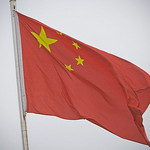
The third meeting of the International Medical Device Regulators Forum (IMDRF), held in France last month, tackled an aggressive agenda to strengthen its role in setting global device policies and added regulators from China for the first time since its inception in October 2011.

Topics: World Health Organization, International Medical Device Regulators, China

Posted by John Lehmann on Wed, Mar 04, 2015

Should THIS be the Next Global Priority?

Recently an article was published in PLOS titled “Strengthening Medical Product Regulation in Low- and Middle-Income Countries” which strongly suggests developing countries must become a global health priority. In fact, The Word Health Organization (WHO) recognizes regulatory system functions as one of the six core building blocks of health systems.

Topics: Global Priority, World Health Organization, Regulatory System